

What is Ad Fatigue?
Ad fatigue occurs when an advertisement’s effectiveness diminishes due to frequent exposure. As viewers are repeatedly exposed to the same ad, its initial appeal fades, leading to a decline in performance compared to its launch.
How to Spot, Prevent, and Fix Creative Fatigue in Meta and TikTok Ads
Dealing with ad fatigue can be inevitable for any advertiser scaling spend on high-velocity platforms. You have built the perfect media plan, launched a high-converting campaign, and your CPA is exactly where you want it.
Then, seemingly overnight, performance halts. Your CPAs increase, your return on ad spend (ROAS) plummets, and your once-winning creatives stop delivering. This decline isn’t a flaw in your fundamental media buying strategy; it’s the natural result of social media ads exhausting its audience. Creatives naturally burn out because of the high ad volume: Facebook users see an ad for every 2-3 pieces of content, Instagram Stories have ads 45-46% of the time, and TikTok users see one ad every 4 videos.
To scale your campaigns efficiently, you must detect, prevent, and fix ad creative fatigue before it quietly burns through your budget.
What Causes Ad Fatigue in Social Media Advertising?
Ad fatigue in creatives occurs when the same users are exposed to the same ad repeatedly, leading to decreased engagement (clicks, likes, watch time). This lack of engagement signals that the ad is providing a poor user experience, as these platforms prioritize content that keeps users on their apps. Consequently, the algorithm begins to penalize the underperforming creative.
3 Signs of Ad Fatigue in Social Media Ads
To identify and address ad fatigue before it negatively impacts your campaign’s performance, you must know what to look for. The following are the three most critical signs of ad fatigue to track in your daily reports:
Frequency vs. CTR Inversion
This is the moment your audience frequency rises while your Click-Through Rate (CTR) simultaneously drops. It is the most definitive proof that your creatives are worn out.
Unexpected Spiked in Ad CPMs
When engagement drops, platforms subtly penalize stale creatives, throttling ad delivery by inflating CPMs, essentially forcing you to pay more for the same number of impressions.
Reduced Engagement Over Time
A noticeable, sudden decrease in engagement metrics like comments, shares, saves, and video watch time signals that the core hook of your ad is no longer effective.
How to Detect Ad Fatigue
To effectively troubleshoot, you must understand the difference between audience fatigue (your targeted pool is saturated) and creative fatigue (your targeting is still effective, but the ad visuals and copy have become stale).
Audience fatigue happens when you have saturated your available audiences. The creative still works, but there are simply no fresh eyes left to see it. Here are the key indicators:
- Your daily reach flatlines even as you maintain or increase your daily budget. The platform physically cannot find new users within your parameters.
- If your ad frequency quickly increases to 3.0 or 4.0, the audience pool is simply too small for your budget. You can then expand your lookalike audiences, open up demographic constraints, or transition to broader Advantage+ audience targeting.
- If your First-Time Impression Ratio drops below 50%, the vast majority of your spend goes toward attempting to re-engage the same users.
[insert calculator: First-Time Impression Ratio = (Reach/Impressions) * 100%]
First-Time Impression Ratio Calculator
Creative fatigue happens when your audience size is perfectly fine, but the ad itself no longer captures or holds their attention. Here’s how you can tell when creative fatigue happens:
- Your click-through rate (CTR) is in a freefall. This means even new viewers are scrolling past your ad without engaging.
- Because users are ignoring the creative, it takes significantly more impressions to generate a single click, driving your CPC up.
- If your hook retention drops massively week over week while your audience size remains broad, the creative is the definitive bottleneck. The audience is there, but your visual hook is failing to stop the scroll.
Further Reading
Measure Ad Performance with the TikTok View Through Rate Calculator
With users constantly moving through content on TikTok, attention is limited and highly competitive. VTR provides a clear signal of how well your ads engage viewers. Our calculator helps you analyze results and optimize your creatives with greater confidence.
Diagnosing Ad Fatigue in Meta vs. TikTok
Recognizing ad fatigue on Facebook is not the same way you would analyze it on TikTok. The platforms dictate completely different consumption behaviors and require platform-specific workflows to spot the gap.
Finding the Data on Meta Ads Manager
Facebook and Instagram rely heavily on passive scrolling. Fatigue here usually means the user has developed some sort of blindness to your specific image or video, scrolling past it without registering the brand. To spot the early signs of ad fatigue, you must build a custom troubleshooting view on Meta Ads Manager.
Follow the steps below to configure your custom view:
- Log in to Ads Manager and go to the Campaigns tab.
- Click on Columns: Performance and select Customize Columns.
- Search for and add the following metrics: Frequency and CTR (Link Click-Through Rate).
- To add First-Time Impression Ratio, go to the Custom section and click Create custom metric.
- Use the formula: (Reach/Frequency) * 100
- Name the metric “First-Time Impression Ratio” (or similar).
- Click Create metric.
- Tick the checkboxes for all your desired columns and apply them to your view.
- Save the entire configuration as your “Fatigue Diagnostic” preset.

If your Frequency is creeping past 3.0 over a 7-day window, First-Time Impression Ratio is well below 20%, and CTR is trending downward, you are seeing symptoms of Meta ad fatigue.
Monitoring Ad Fatigue on TikTok Ads
TikTok is an active, high-velocity entertainment platform. Fatigue happens much faster here, where the platform actively stops serving videos that fail to retain viewers in the first few seconds.
A TikTok ad can fatigue in just a few days. To identify this:
- Log in to TikTok Ads Manager and go to Campaigns.
- Click on the Ad tab.
- Hover over a specific ad and click View report.
- Go to the Insights tab.
- Examine the Average play time per video view curve.
A rapid decline or drop-off in viewing time during the first two seconds (or even earlier) indicates that your creative’s visual hook is no longer effective. This failure to retain viewers can lead to a penalty in your ad’s delivery performance.
How to Fix Ad Fatigue Once It Hits
Once you have diagnosed the precise point of creative fall-off, the next step is execution. Here’s how to combat ad fatigue holistically and implement a system to prevent ad fatigue from recurring.
Audience Expansion vs. Creative Refresh
Use the following guidelines to update your ad set based on your diagnosis:
Good CTR, Low Reach: Your creatives are performing well, but you need a larger audience. To bring fresh eyes to your ads, expand your targeting. This can involve broadening your demographic layers, increasing the percentage for your lookalike audiences, or generally relaxing your targeting parameters.
Efficient CPMs, Low CTR (or View throughs): You need a creative reset. This doesn’t necessarily mean overhauling the entire ad. Try tweaking the 3-second hook, updating the thumbnail, or swapping out the Call to Action (CTA). These adjustments should refresh the user’s experience, leading to more engagement instead of immediate swipe-aways.
TikTok Creative Testing Strategy
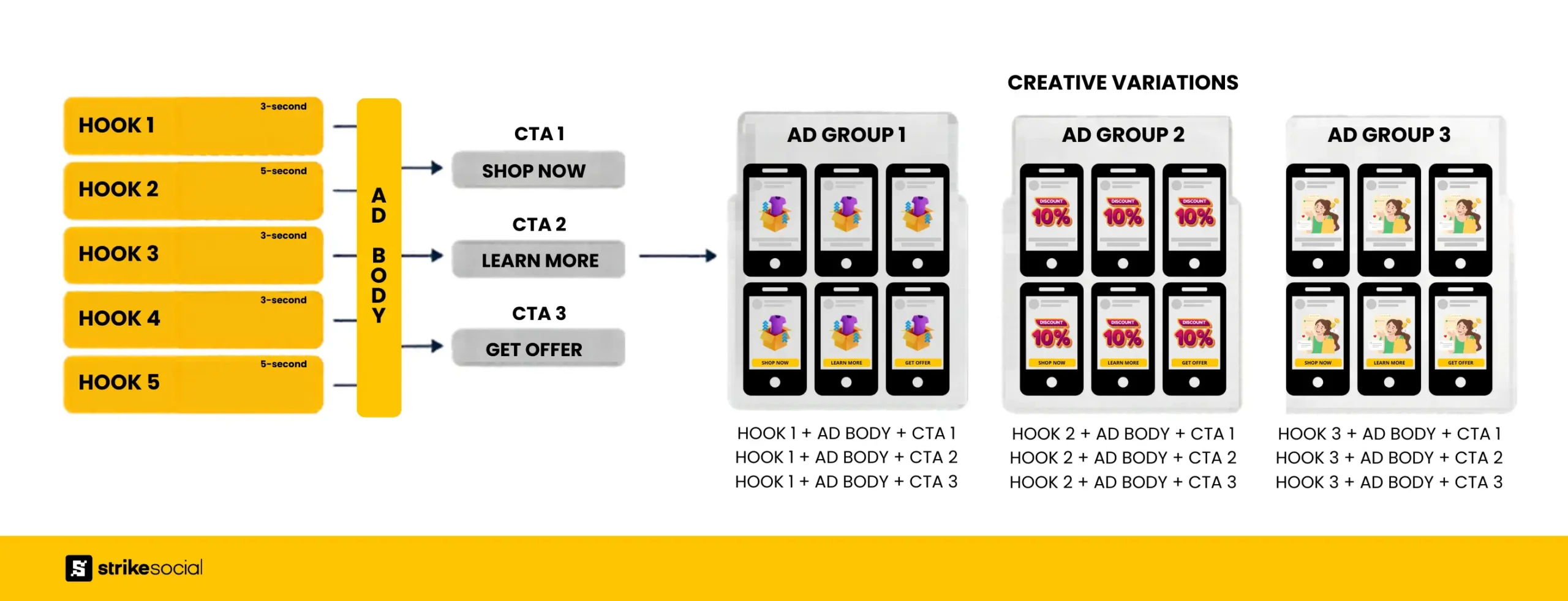
To prevent ad fatigue on TikTok, you must implement a modular creative testing strategy. Instead of spending thousands of dollars shooting entirely new, bespoke videos every week, shoot modularly. Film one core body for your ad, but film five different 3-second hooks and three different CTAs.
When you experience TikTok ad fatigue, you simply swap the underperforming hook for a fresh one. This approach is one of the most vital best practices against TikTok creative fatigue, allowing you to artificially extend an ad’s lifespan, beat algorithm suppression, and keep production costs low.
Creative is the New Meta Targeting
Historically, audience fatigue is fixed by building new targeting pools. Now, creative is the new targeting. Especially with Advantage+ catalog ads, e-commerce companies can make use of Meta’s data to ensure potential customers are shown products from your inventory that align with their past behavior.
For advertisers seeking more hands-on control over their creatives, Dynamic Creative Optimization (DCO) allows you to upload various text, image, and video assets. Meta then mixes and matches these in real-time, meaning a single user is unlikely to see the exact same ad combination repeatedly. This also allows Meta to efficiently identify and engage new audience segments.
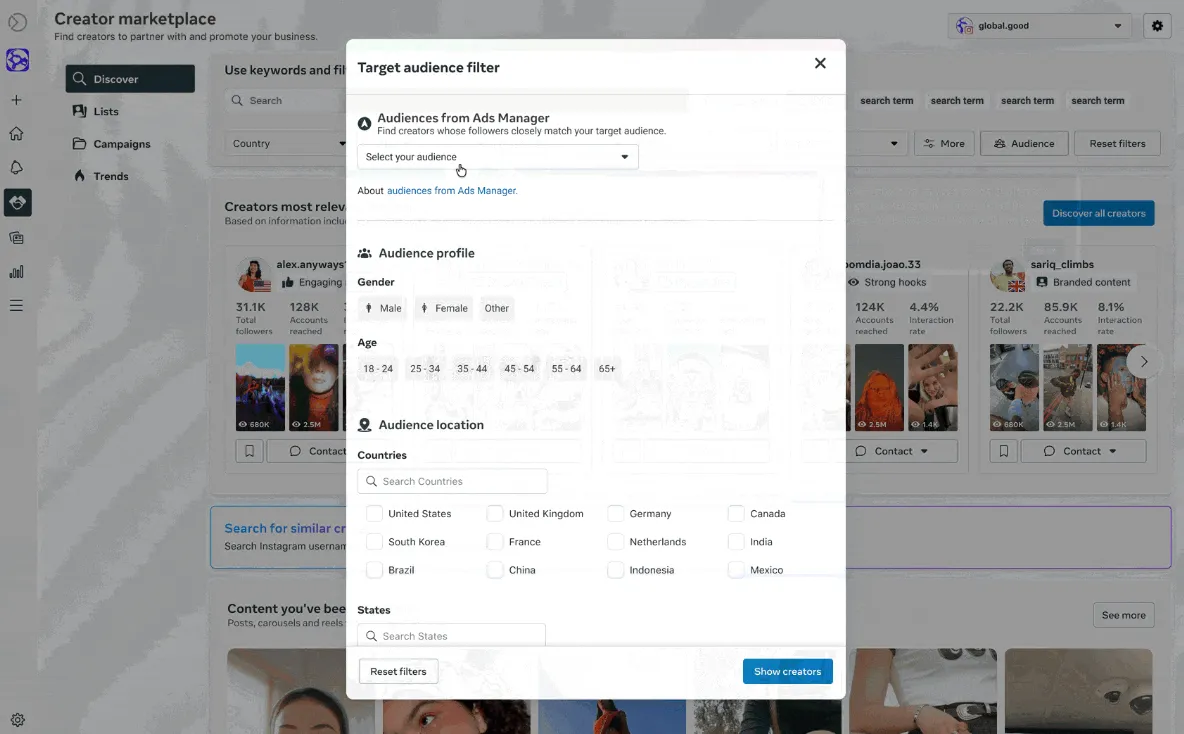
Furthermore, updates like those discussed at Facebook’s NewFront highlight Meta’s machine learning proficiency in finding qualified buyers, provided the correct inputs are given. To preempt both audience and ad creative fatigue, advertisers should use target audience filtering. This involves building custom audiences in Ads Manager and collaborating with creators who can introduce your brand to fresh audiences and communities. Utilizing partnership ads is an effective way to explore and establish new audience segments you might not have previously considered.
Influencer Creative Strategy
Still, without a constant pipeline of fresh assets, ad fatigue can be a constant threat. Relying exclusively on time-consuming, high-production studio shoots is no longer fast enough for the demands of modern paid social media advertising. By implementing an influencer marketing strategy, you can source a continuous stream of User-Generated Content (UGC), guaranteeing a steady supply of fresh ad creatives.
Influencer content feels native to social media platforms, naturally avoiding the polished, “ad-like” appearance that often triggers fatigue. Injecting a steady stream of UGC into your paid social ads is among the absolute creative best practices to maintain volume, keeping your view rates high, and preventing fatigue from setting in.
FAQs on Ad Fatigue in Paid Social
You will know your Meta campaigns experience ad fatigue when you observe an inversion between Frequency and CTR. If your Frequency rises above 3.0 in a short window while your CTR drops and CPMs increase, Meta has been silently penalizing your ads for being shown too many times to the same audiences.
This calls for a review to either refresh your ad creatives or take a look at broadening your audience targeting.
Creative fatigue on TikTok is caused by the platform’s hyper-fast consumption rate. Users quickly tire of seeing the same hooks. To avoid it, employ a modular creative testing framework—frequently rotate the first 3 seconds of your videos to capture attention and maintain high audience retention rates.
The best practices to avoid ad fatigue include:
• utilizing dynamic creative optimization (DCO) to mix and match ad assets
• building a strong influencer creative pipeline for continuous UGC visuals
• expanding your audiences when frequency caps are hit, and
• utilizing modular video editing to swap out hooks before the entire ad loses its effectivity.
Scale Your Campaigns Without Burning Out Creatives
Ad fatigue is often an unavoidable occurrence in paid social media advertising; not necessarily a sign of a failing brand. By understanding how the platforms operate, recognizing the early signs, and diagnosing whether your audience or your creatives are the bottleneck, you can safeguard your campaigns before ad fatigue hits. This means setting up a proactive testing framework to prevent sudden spikes in CPA and sharp drops in performance.
Managing frequency caps, monitoring performance thresholds, and executing rapid creative rotations across multiple platforms is a 24/7 job. It requires dedication, data, and continuous output.
Strike Social’s teams proactively monitors these thresholds, ensuring your social media ads scales efficiently while avoiding algorithmic penalties. Partner with a team that knows how to manage creative and audience fatigue while maintaining peak performance and efficiency. Contact our team and request a demo of our ad tech tools today.

Article by
Lee Baler, Strike Social’s VP of Sales & Strategy
Lee leads global strategy, helping clients and agencies maximize YouTube and paid social performance. Constantly tracking industry trends, he translates insights into strategies that help brands stay competitive and achieve sustained profitability.


