

Key Takeaways
- High Participation & Predictable Spend: 75% of US consumers plan to celebrate this year, with the majority anticipating spending between $50 and $200.
- Price Sensitivity for Consumers: Almost half (43%) of shoppers believe rising prices will significantly or moderately affect their holiday shopping, underscoring the importance of targeted promotions.
- Dominate with In-Store Promotions: Brick-and-mortar stores have a significant opportunity to scale advertising, as 60% of shoppers plan to make all or most of their holiday purchases in-store.
Jump to Section
2026 Mother’s Day Advertising Strategy to Capture High-Intent Shoppers
This Mother’s Day, we’re looking at consumer spending climbing to another record high of $38 billion. Despite fluctuations from the 2024 and 2025 celebrations, this year’s forecast is expected to break the previous record of $35.7 billion set in 2023.
Executing a highly profitable Mother’s Day advertising strategy requires looking far beyond basic ad copy and tapping into full-funnel, omnichannel tactics to reach buyers precisely when they are ready to convert. The spending power associated with this holiday is undeniable, and that’s what advertisers should be ready for once the holiday hype hits.
To capture these high-intent shoppers in 2026, we are setting the stage for a comprehensive Mother’s Day marketing approach. This means building an integrated digital footprint that guides the consumer from top-of-funnel awareness to the final conversion transaction.
When Should You Start Mother’s Day Marketing Campaigns?
Your Mother’s Day campaign should follow a strategic timeline that transitions from broad awareness in early April to a high-conversion focus in May. Begin by deploying top-of-funnel video and awareness initiatives during the first half of April. By late April, pivot to retargeting those who interacted with ads centered on specific products.
Finally, in the week leading up to the holiday, drive results with a high-urgency, promotion-driven “Last-Minute” campaign flight.
Early to Mid-April
Awareness
Late April
Retargeting

Early May
Conversion
Mother’s Day
Conversion
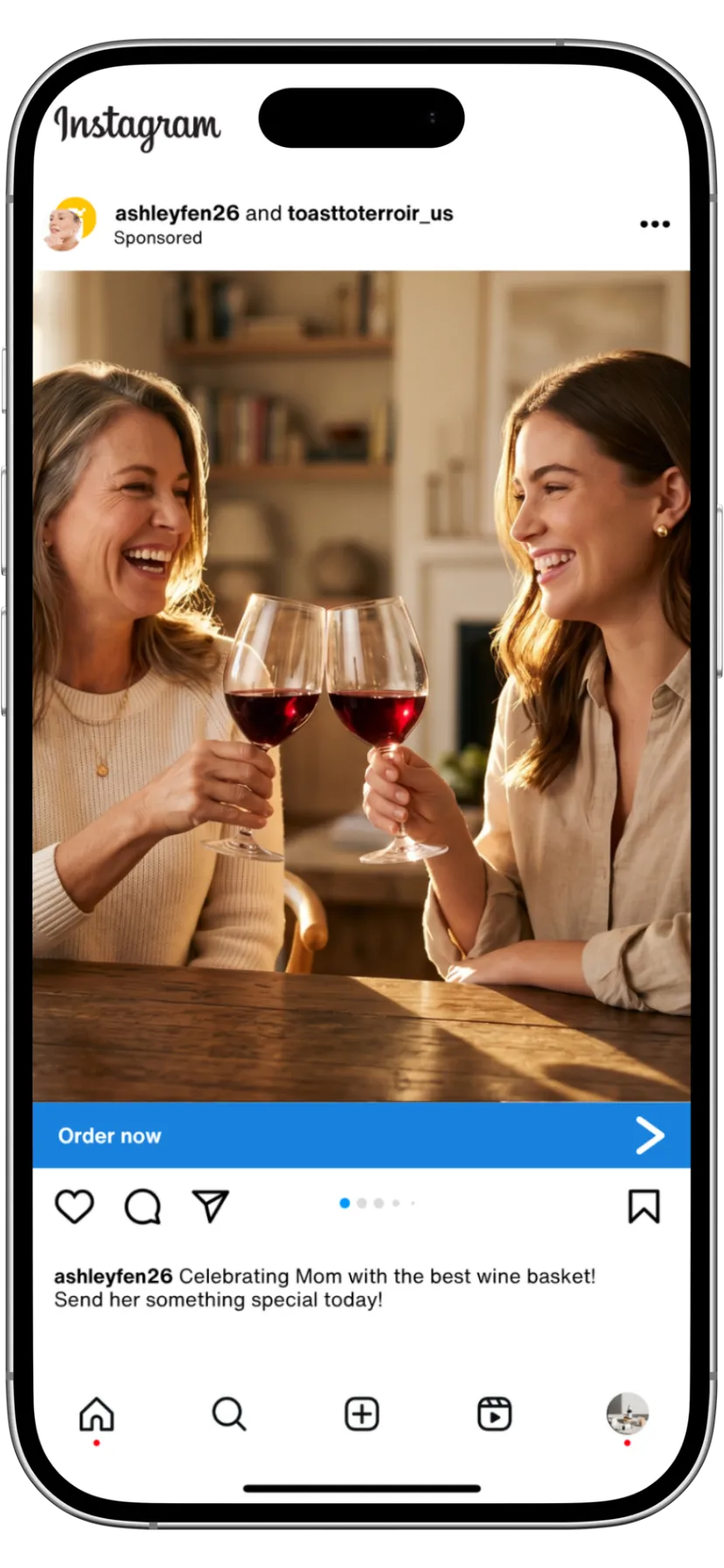
Post-Event
Conversion
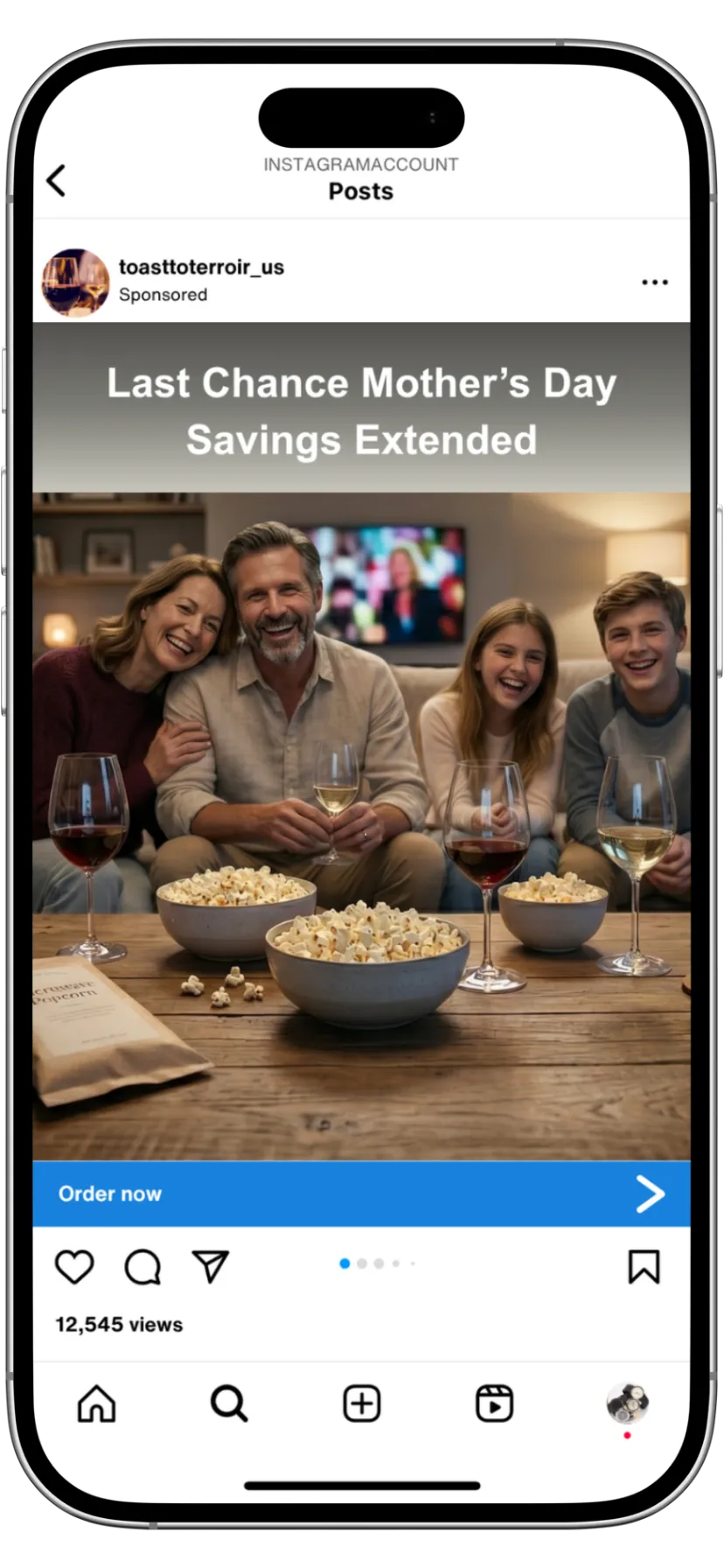
Advertisers who maintain momentum yield significantly better results. According to MNTN’s data, brands that kept campaigns live into Q2 saw a 68% increase in average conversions and a 61% drop in average CPA. This proves that starting early and maintaining spending momentum through the gifting season is a foundational strategy that keeps your brand top of mind before and after the event’s hype.
Mother’s Day Advertising Strategy That Converts
Regardless of whether you are a boutique floral shop or a massive global brand, the primary objective as the holiday nears is to lock in conversions. This requires an advertising strategy that pairs high-converting tactics with a diverse media mix to make sure CPA remains efficient as you increase your investment.
As performance television transforms into a powerful direct-response tool, integrating Connected TV (CTV) into your strategy is essential. By aligning your communication across YouTube, Meta, and TikTok, you reach shoppers at various points of the buying journey.
How Do You Target Audiences for Mother’s Day Ads?
Numerator’s data shows that 75% of US consumers plan to celebrate Mother’s Day this year. Most of these intended celebrators will spend between $50 and $200 on their celebrations. But who are they buying for?
Data reveals that 45% of single mothers purchase a gift for themselves during this holiday. Broadening your targeting parameters to include self-gifting messaging can expand your audience segments and open another revenue channel.
YouTube Audience Targeting Strategy
Start by building your audience signals in Google Ads. We recommend creating a custom audience segment, such as a “Mother’s Day Targeting” signal, that blends specific search terms (e.g., “Mother’s Day – search terms”) with highly relevant in-market categories, such as “Parenting Resources” and “Mother’s Day Dining.”
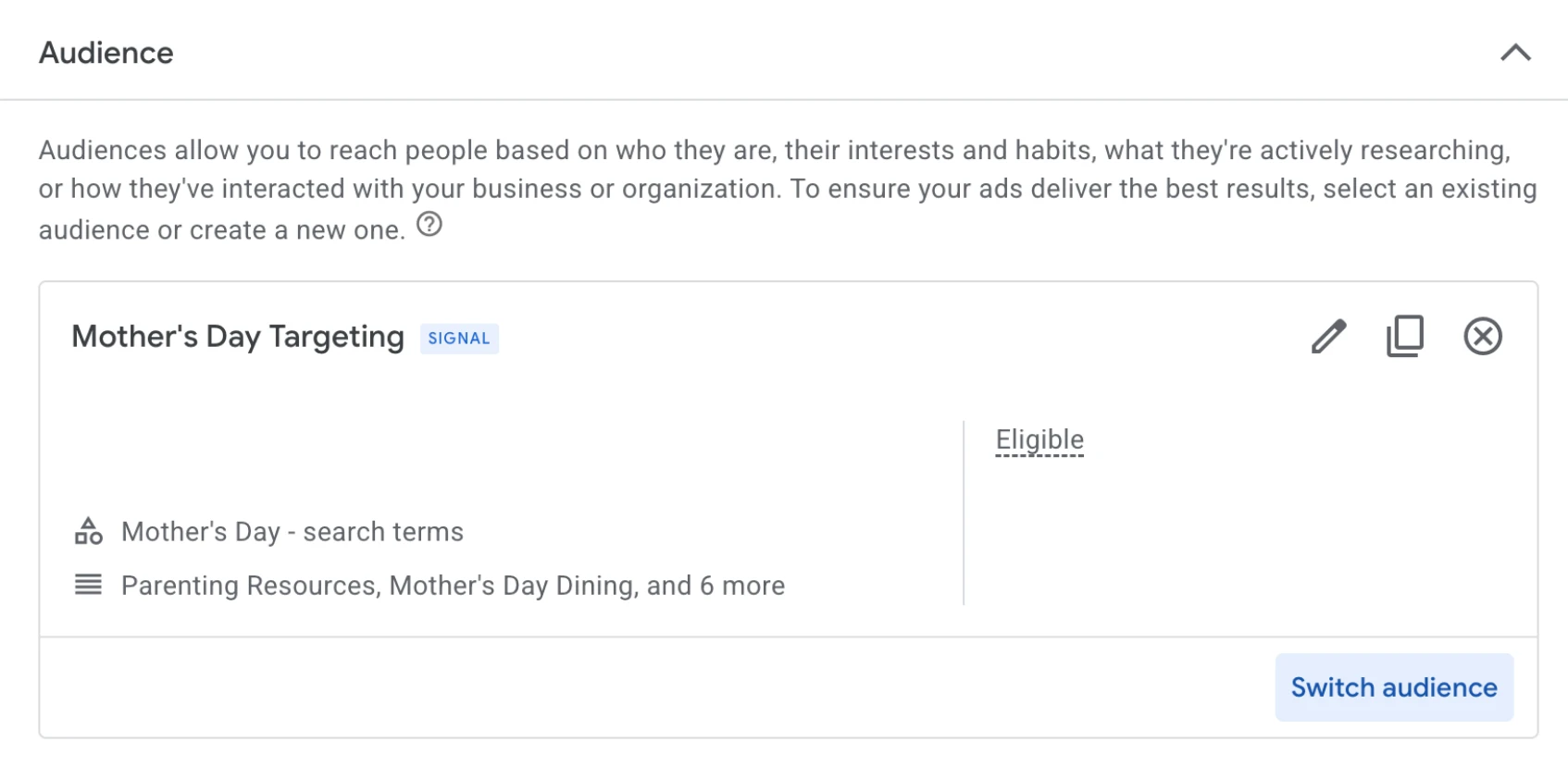
Because this broad approach can yield a large pool of eligible users, you must exercise strict control over where they see your brand.
It’s important to know where your ads are strong. For instance, if you already have a good YouTube audience and have seen strong engagement with it, lock in YouTube placements only for your ads. By targeting the YouTube app only, you keep your ad spend dedicated to high-impact, intent-driven video touchpoints.
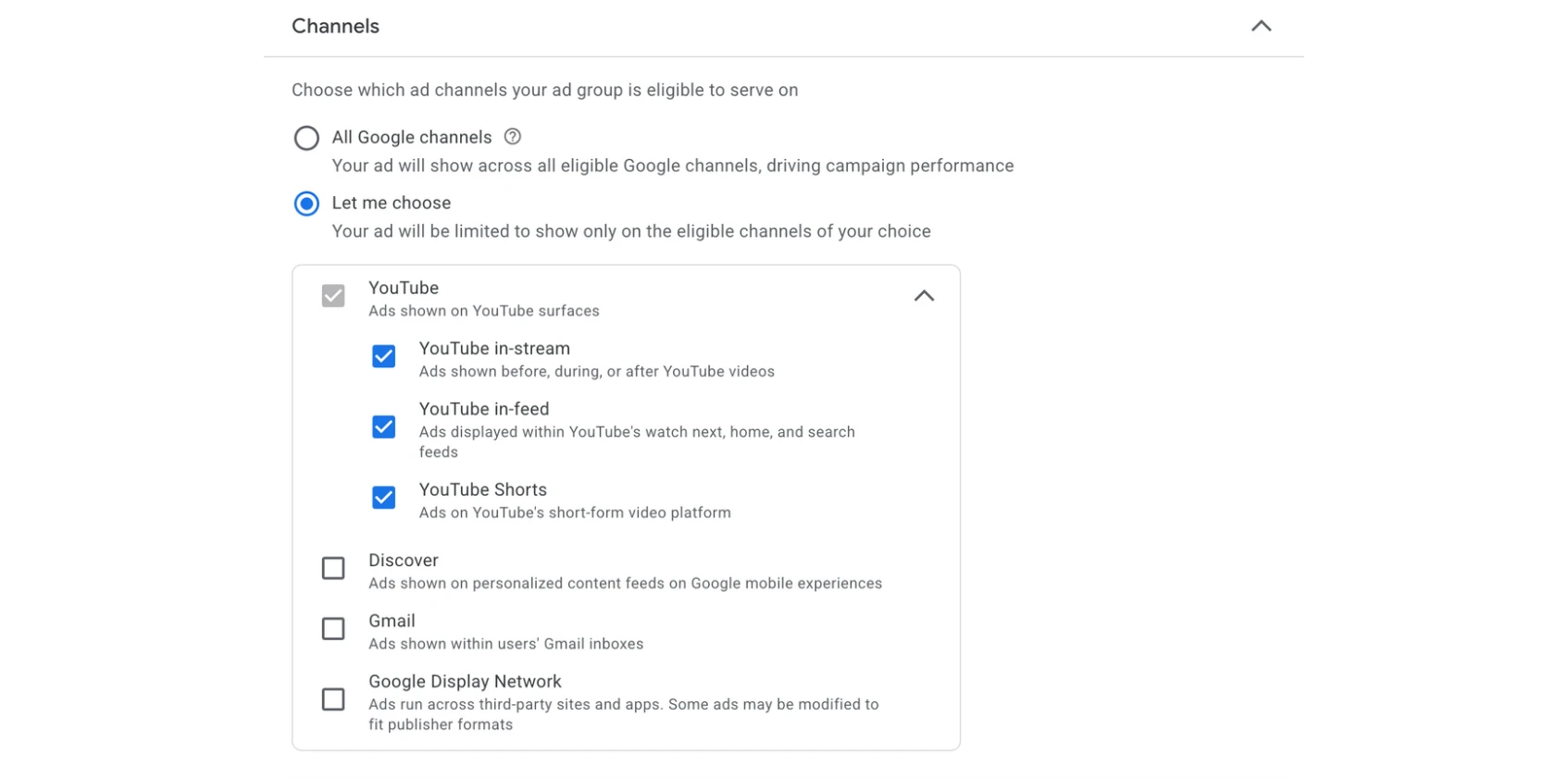
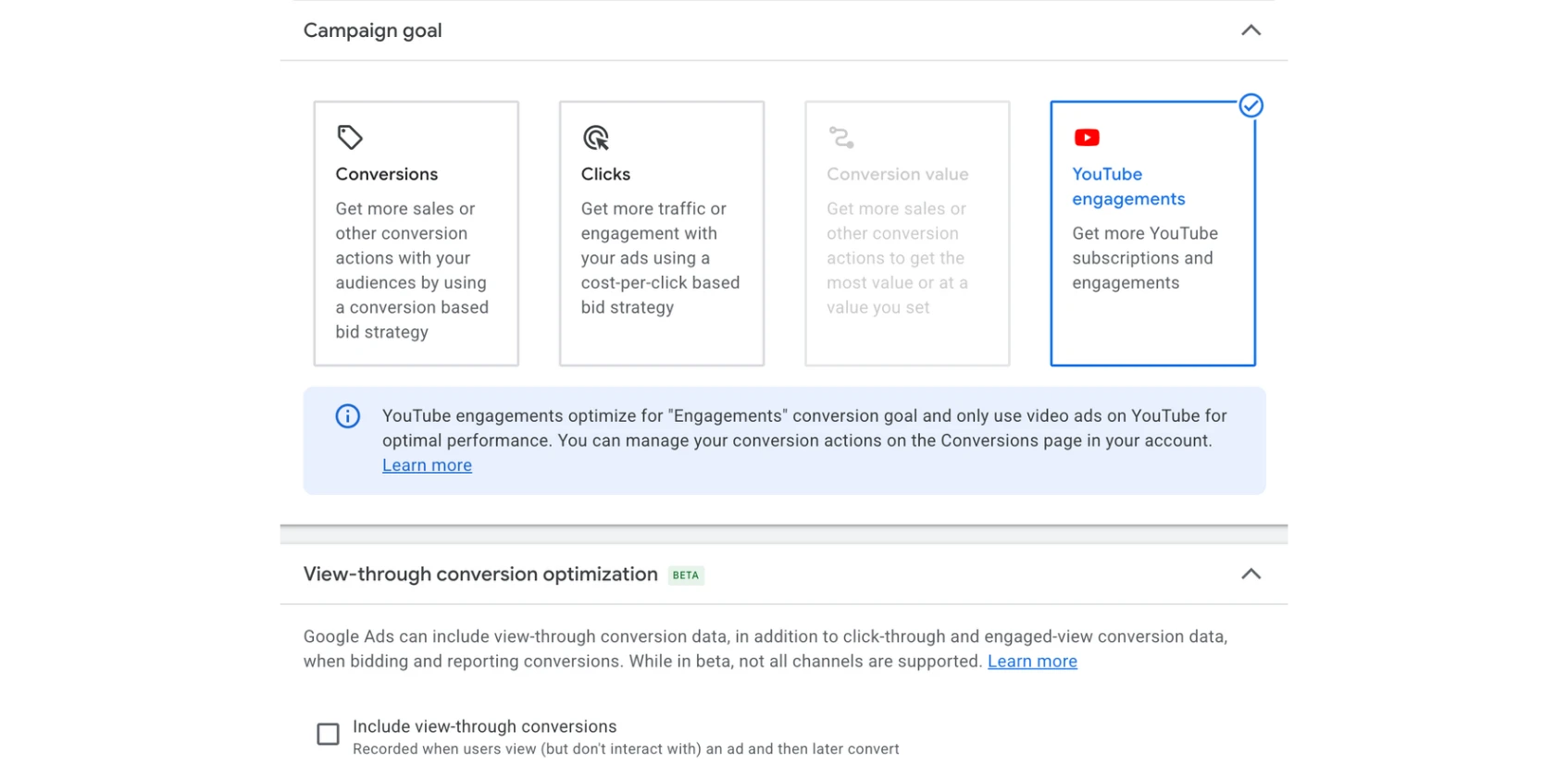
Set your initial Google Ads campaign goal to “YouTube engagements” to prioritize building a robust retargeting pool of users who actively subscribe to or engage with your brand. For top and mid-funnel campaigns, be sure to enable “View-through conversion optimization” (currently in Beta) in your settings. This allows you to accurately record and attribute users who view your ad without clicking, but later convert.
Once this data foundation is laid, execute your creative funnel. Initiate contact with high-frequency, non-skippable 6-second bumper ads to establish rapid brand recall. Retarget those specific viewers with engaging, vertical video tailored for YouTube Shorts to drive consideration. Finally, push those engaged users further down the funnel into conversion-based, shoppable CTV ads. This distinct architecture bridges the gap between mobile discovery and large-screen, high-intent purchasing.
Further Reading
From Product Feed to Creative Engine: Linking Google Merchant Center
Merchant Center has moved from a passive listing tool to an active driver of ad performance. In automated campaigns, your feed determines how products are presented across formats and placements. By optimizing your data, you can improve creative quality and unlock better results across Demand Gen and PMax campaigns.
Mother’s Day Marketing Messages & Offers
Current economic realities dictate that brands must carefully craft Mother’s Day marketing messages that convert price-sensitive buyers without cheapening the brand’s perceived value.
Almost half (43%) of shoppers think rising prices will have a significant or moderate impact on their holiday shopping, leading to fewer gift purchases and an active hunt for promotions.
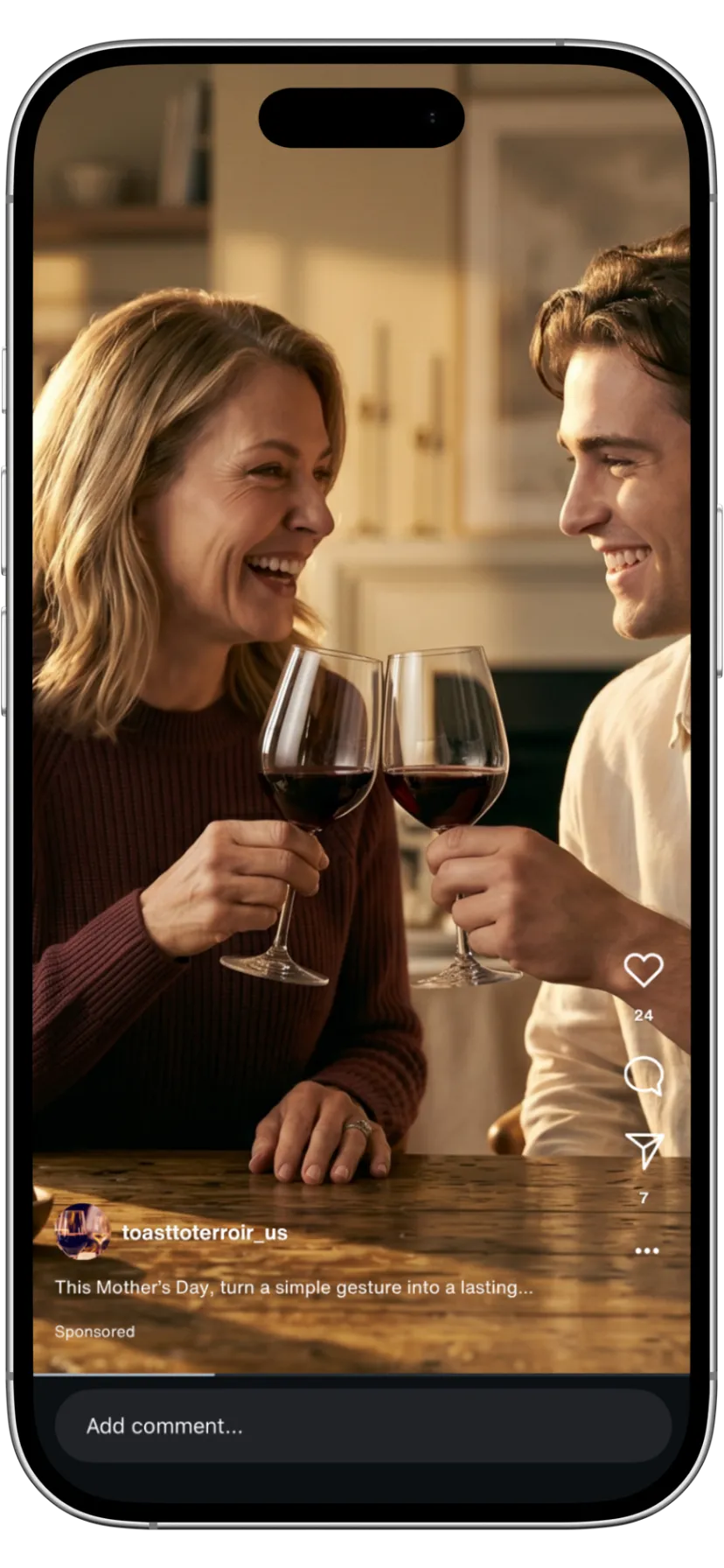
To counter this friction from inflation, your Mother’s Day promotion ideas must be explicit. Advise your creative teams to clearly highlight specific promotions, sales, and coupons in the ad copy and visuals.
Mother’s Day Promotion Ideas on Meta
Beyond explicit promotions, how you deliver these messages matters just as much as the offer itself. Meta has deeply integrated its Advantage+ suite, bringing powerful AI-driven features that not only expand audiences but also automatically generate fresh creative variations to prevent ad fatigue.
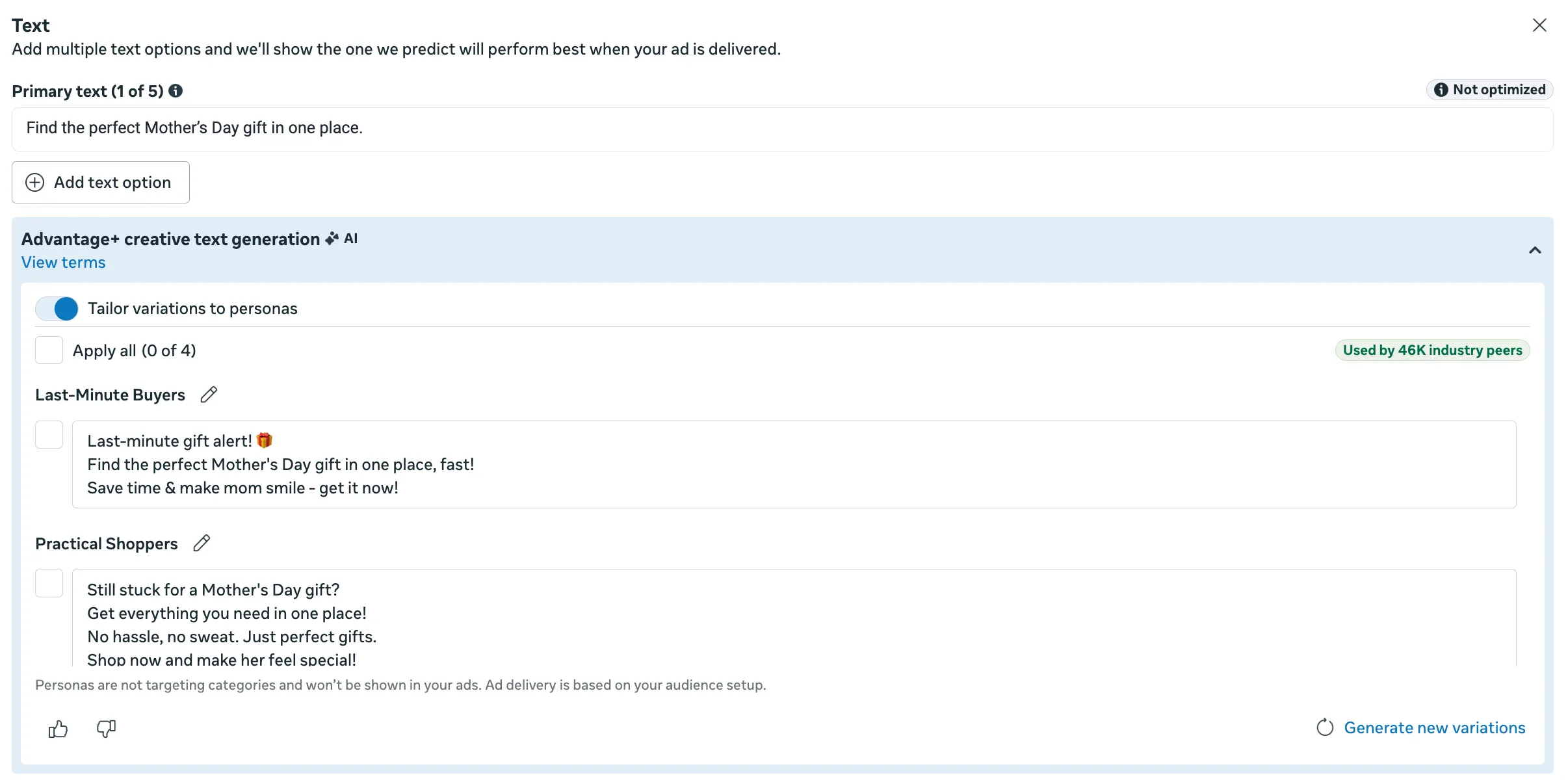
As you funnel your audiences toward conversion, they should see the same brand with fresh, tailored perspectives. For instance, Meta’s Advantage+ creative text generation uses AI to tailor ad variations to specific personas. You can serve a “Last-Minute Buyer” copy that grabs their attention while also serving a “Practical Shopper” copy tailored to your audience.
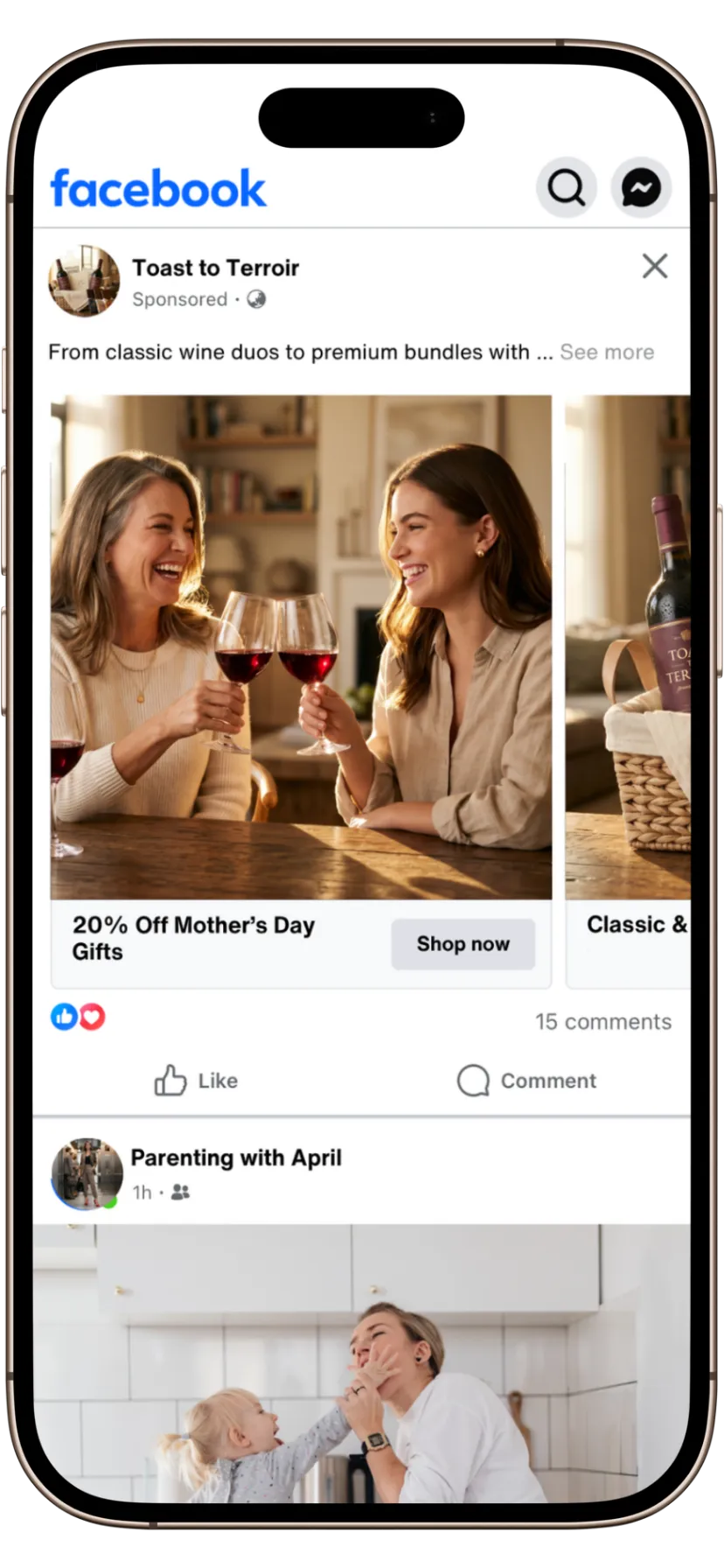
Coupled with Advantage+ creative image generation, which data shows can deliver up to 23% improvement in cost per conversion. By automatically building dynamic visual variations, you ensure your campaigns remain engaging throughout the flight.
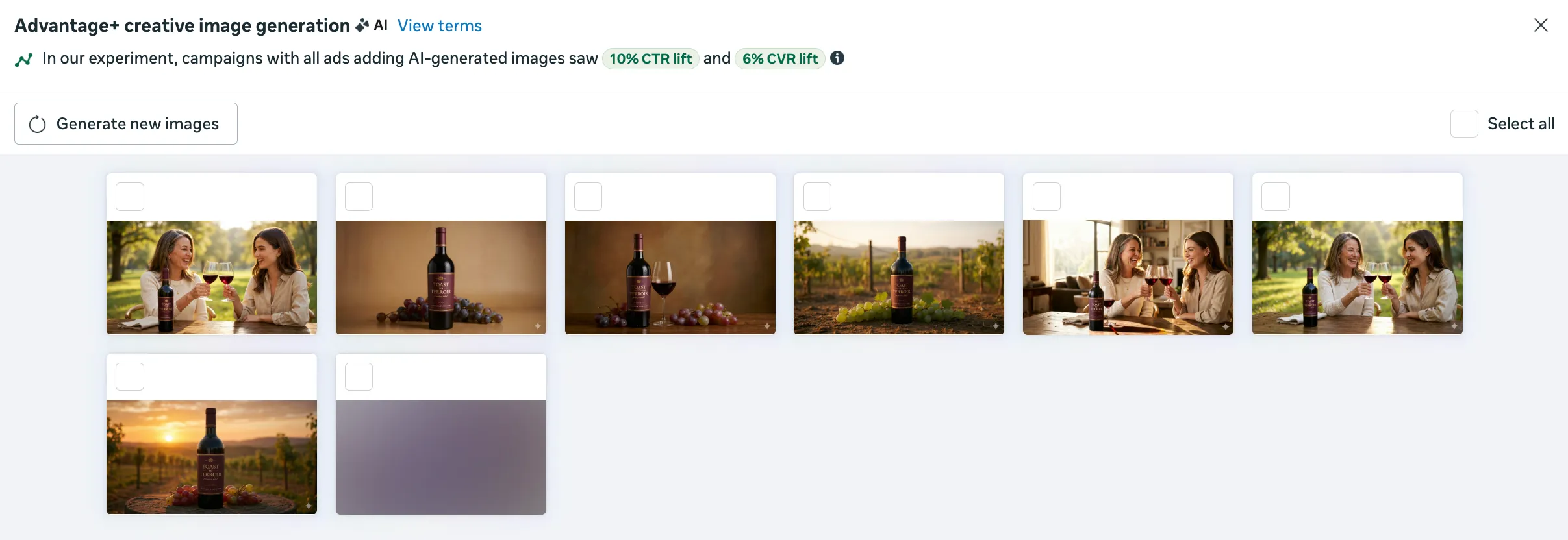
Mother’s Day Gifts & Creative Ads
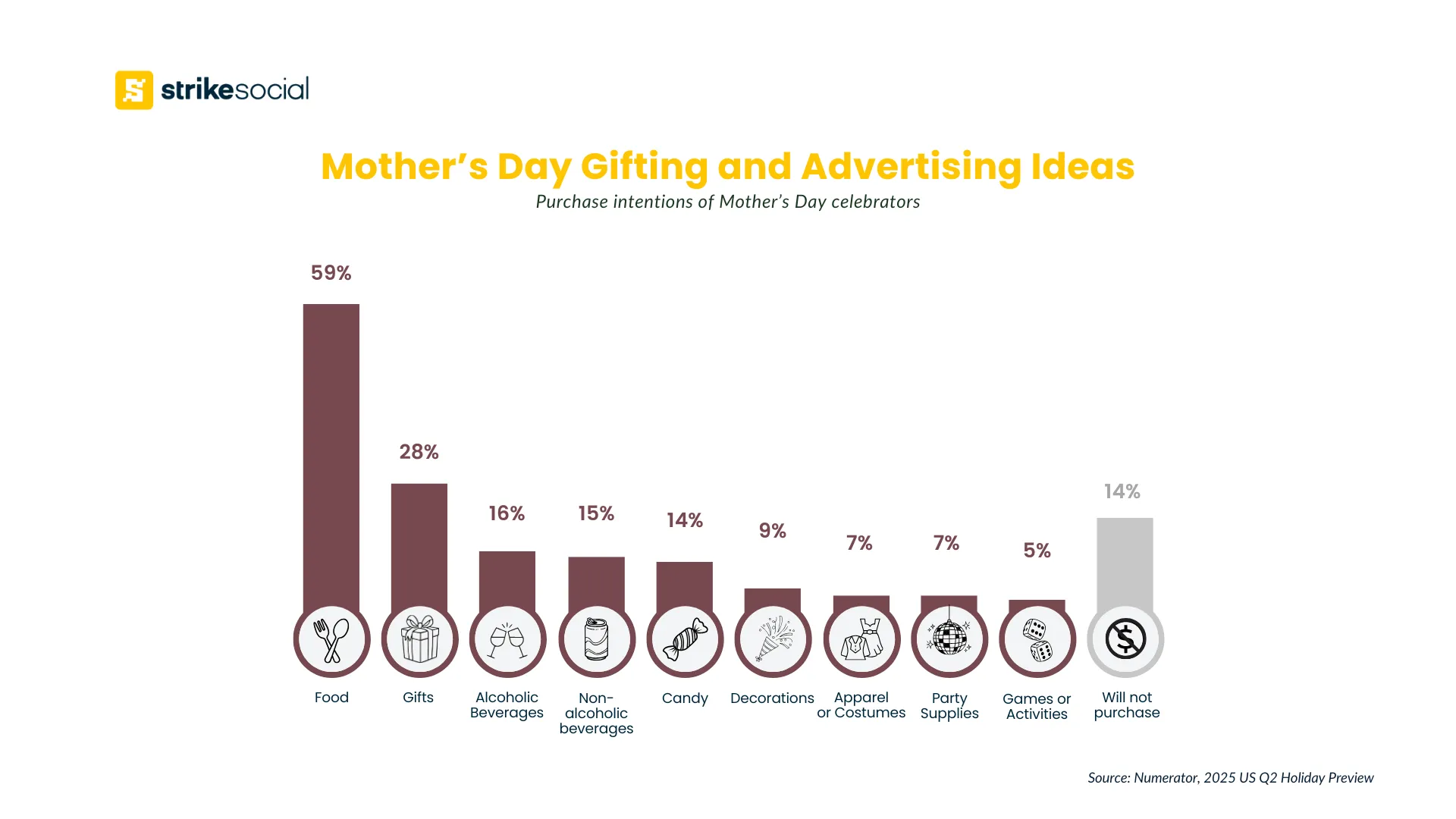
You must align your Mother’s Day creative ads with what consumers actually intend to buy. Crafting ads tailored to high-demand verticals ensures your ad spend is invested in high-converting categories and placements.
For instance, 59% of intended celebrators will purchase food for the holiday, while 28% will purchase gifts.
If you are developing a Mother’s Day marketing strategy for e-commerce, you must also account for offline conversions. 60% of Mother’s Day shoppers expect to do all or most of their holiday shopping in-store, while only 17% will do it all or mostly online.
You are competing with major retail giants capturing physical foot traffic; nearly half of shoppers expect to visit Walmart (45%), followed by Amazon (38%) and Target (20%). Digital ads must seamlessly bridge the gap to in-store purchasing through local inventory ads and localized targeting.
How to Use Influencer Marketing for Mother’s Day
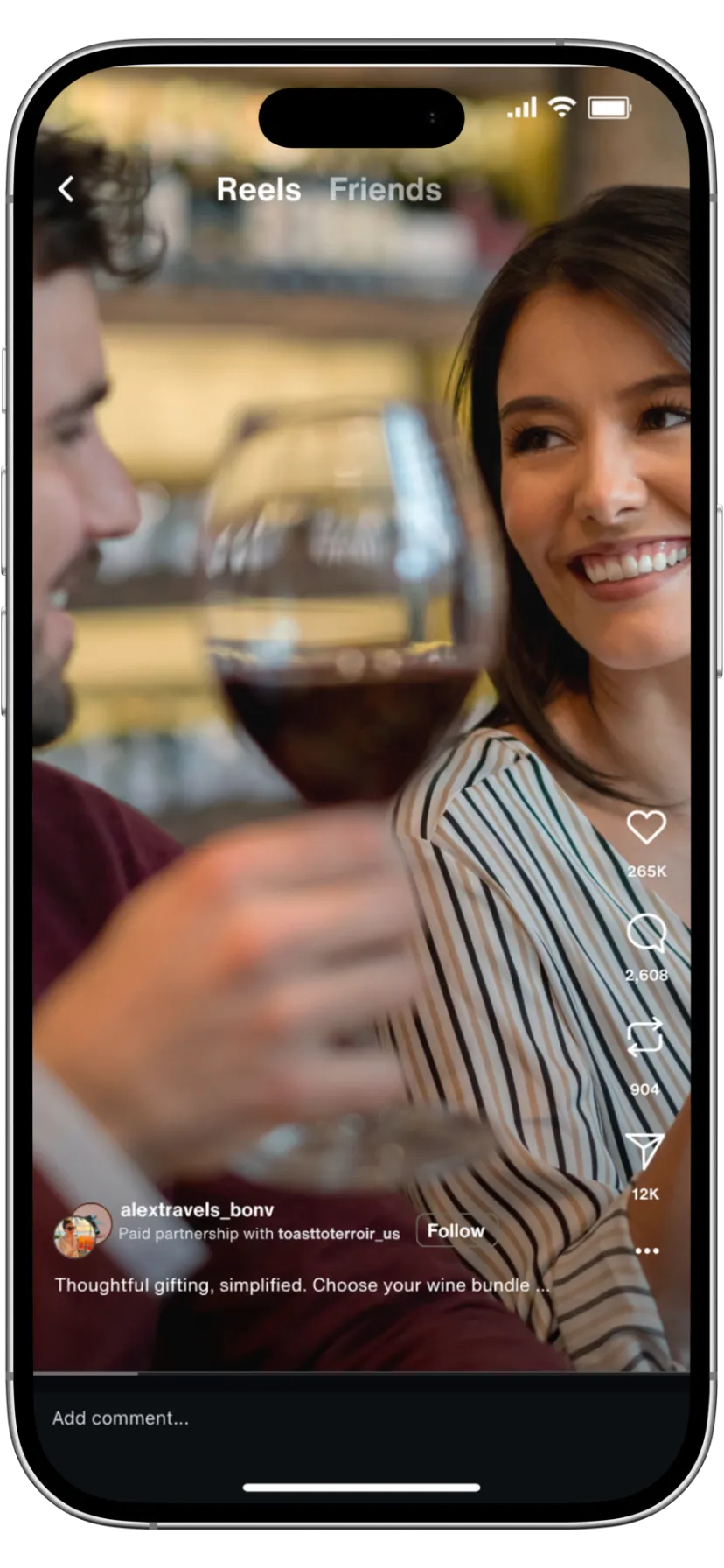
To round out your approach, a modern Mother’s Day influencer marketing strategy is essential in 2026. Partnering with creators helps you craft authentic Mother’s Day campaign ideas that resonate with audiences looking for ways to celebrate with their moms, whether through an online gift or a celebration idea.
Instead of traditional shoutouts, utilize native affiliate tracking and shoppable video formats on platforms like TikTok. Having creators film authentic unboxing experiences or “gift guide” roundups, paired with direct product links via the yellow basket, transforms top-of-funnel influencer engagement into trackable, direct-response conversions.
Mother’s Day Advertising Strategy FAQs
The best strategy blends high-converting paid social campaigns across Meta and TikTok with a synchronized CTV strategy to capture audiences across multiple touchpoints, lowering CPA and driving both online and in-store foot traffic.
Brands should begin top-of-funnel awareness campaigns in early April, build retargeting pools through mid-April, and launch high-urgency promotional ads the week before the holiday to capture peak revenue momentum.
Focus on explicit promotional messaging. With consumers feeling the impact of rising prices, offering clear discounts, bundling products, and utilizing localized ads for in-store shoppers are highly effective tactics to secure the sale.
Top ad formats include creator-led shoppable videos highlighting top gifts like flowers and gift cards, dynamic product ads featuring limited-time promotions, and emotional CTV spots that resonate with both gift-givers and self-gifting mothers.
Scaling Seasonal Revenue on Mother’s Day
As consumer intent shifts toward both distinct price consciousness and an eagerness to return to in-store shopping, your paid social strategy must serve as the bridge between digital discovery and the final purchase.
To truly win this year, your strategy must be sustained through omnichannel efforts, a funnel sequence to guide users through the funnel, expanded audiences to include self-gifting demographics, and be value-driven, with localized targeting to drive in-store intent.
By deploying this full-funnel architecture, you will not only capture high-intent shoppers at peak moments but also maintain efficient CPAs to drive a highly profitable Mother’s Day.

Article by
Lee Baler, Strike Social’s VP of Sales & Strategy
Lee leads global strategy, helping clients and agencies maximize YouTube and paid social performance. Constantly tracking industry trends, he translates insights into strategies that help brands stay competitive and achieve sustained profitability.


