

Strike Overview
- What’s a good CTR?: Is your TikTok ads CTR at 1% performing well, or is there room for improvement? Seasonality, campaign objectives, and goals all influence what counts as strong performance.
- Creatives and conversions: The first three seconds of your ad often determine whether users click or keep scrolling. Attention at the start is everything.
- Diagnose and optimize: High click-through rates don’t always mean conversions. Identify gaps in hooks, landing pages, and campaign objectives to turn clicks into measurable revenue.
Jump to Section
TikTok Ads CTR: How to Diagnose Low Performance and Optimize Campaigns
Understanding your TikTok ads CTR is the first step to understanding how users engage with your ads on a fast-paced, scroll-heavy platform. On TikTok’s algorithmic feed, attention is fleeting. If your TikTok ad fails to capture interest within the first 3 seconds, it disappears into the scroll, taking performance with it.
Click-through rate (CTR) is one of the most telling metrics in the TikTok Ads Manager. It helps distinguish between ads that genuinely resonate and those that simply generate impressions without intent. When your TikTok ads CTR fluctuates or declines, it’s often an early warning sign of creative fatigue, audience saturation, or a misalignment between your ad and what you’re actually selling.
But CTR alone doesn’t tell the full story. If you’re logging into TikTok Ads Manager and seeing strong click-through rates that aren’t translating into sales or purchases, you need a diagnostic approach.
This guide takes a performance-first approach to TikTok Ads Optimization. You’ll learn how to analyze underperforming campaigns, understand why high click-through rates don’t always translate into high revenue, and apply optimization strategies to increase TikTok CTR while driving sustained growth.
What is a Good Click-Through Rate (CTR) for TikTok Ads?
Before you can optimize for TikTok ads CTR, you need a realistic baseline. A “good” TikTok CTR is not a single number; it depends heavily on your campaign objective and how TikTok’s delivery system is optimized.
Click-focused campaigns and conversion-focused campaigns behave very differently. When you run TikTok ads optimized for clicks or traffic, the algorithm prioritizes users most likely to tap on the ad. Conversion campaigns, on the other hand, optimize for users who are more likely to complete a downstream action, such as an in-app purchase, a TikTok Shop checkout, or an off-platform conversion.
TikTok Ads CTR Benchmarks by Campaign Objective
Click-Focused Campaigns
Based on industry trend data through 2025, click-optimized campaigns consistently deliver higher TikTok ad CTR than conversion campaigns.
- Peak CTR for click campaigns reaches ~2.39%, significantly higher than conversion-optimized campaigns at ~1.77%
- This gap is expected, as traffic-based algorithms are designed to maximize clicks.
Seasonality plays a clear role. Post-holiday fatigue hits click campaigns hardest in February, followed by a gradual recovery in April and May. CTRs typically peak again between July and August, likely driven by summer promotions and back-to-school shopping, and remain relatively strong through the end of the year.
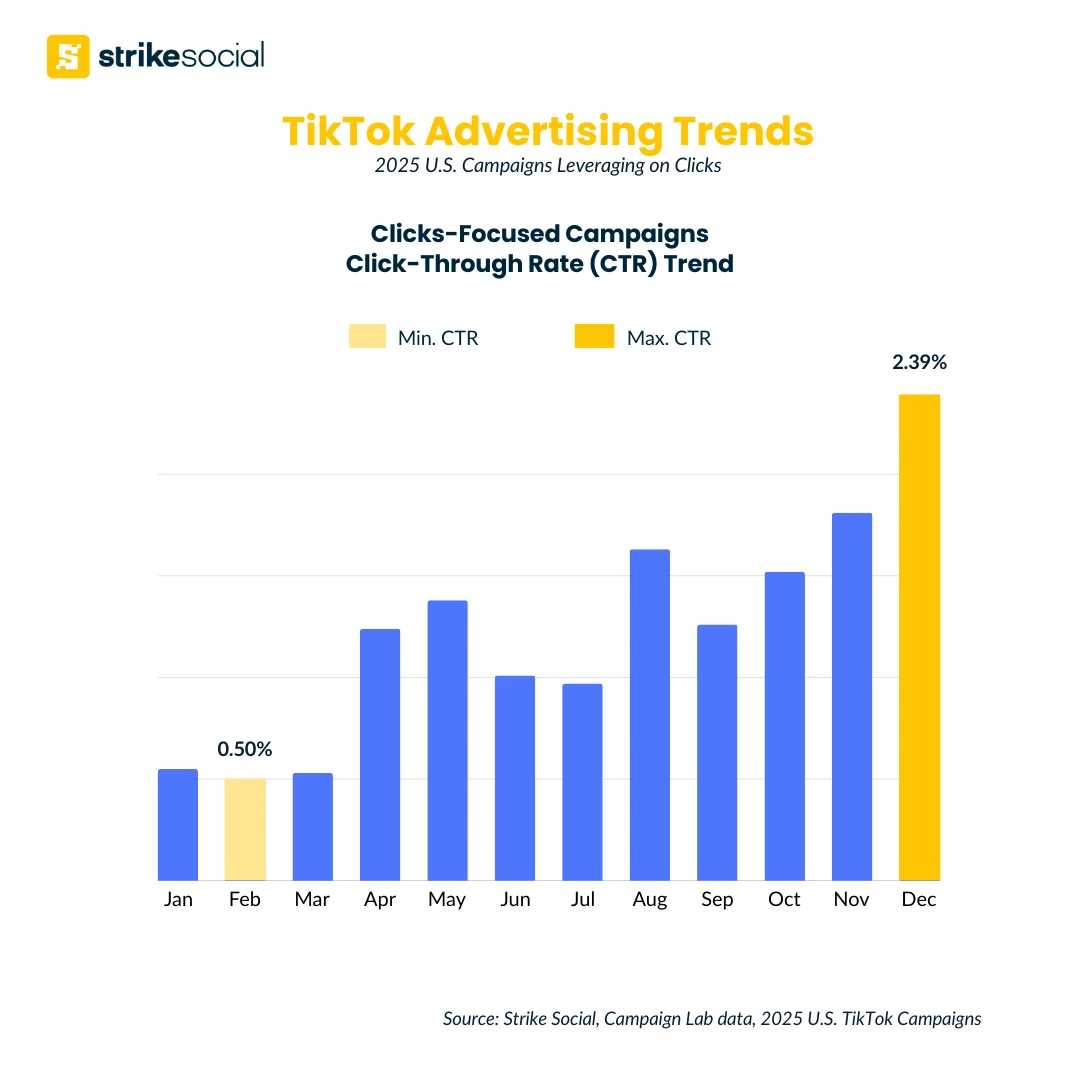
Takeaway: If you’re running click-focused ads and maintaining a 1.0% CTR or higher, especially during Q1, you are performing above average.
Conversion-Focused Campaigns
Conversion campaigns attract fewer clicks but higher-intent users. The data shows a very different engagement pattern:
- CTR peaks earlier, with strong performance in Q1 and early Q4.
- High-intent engagement increases around early holiday shopping periods, such as Amazon Prime Day and early Thanksgiving promotions
- After peaking in October, TikTok CTR declines in November and December.
This drop does not necessarily indicate poor performance. In Q4, ad volume and competition increase dramatically, driving up impressions faster than clicks. As a result, TikTok ads CTR may decline even while conversion volume increases.
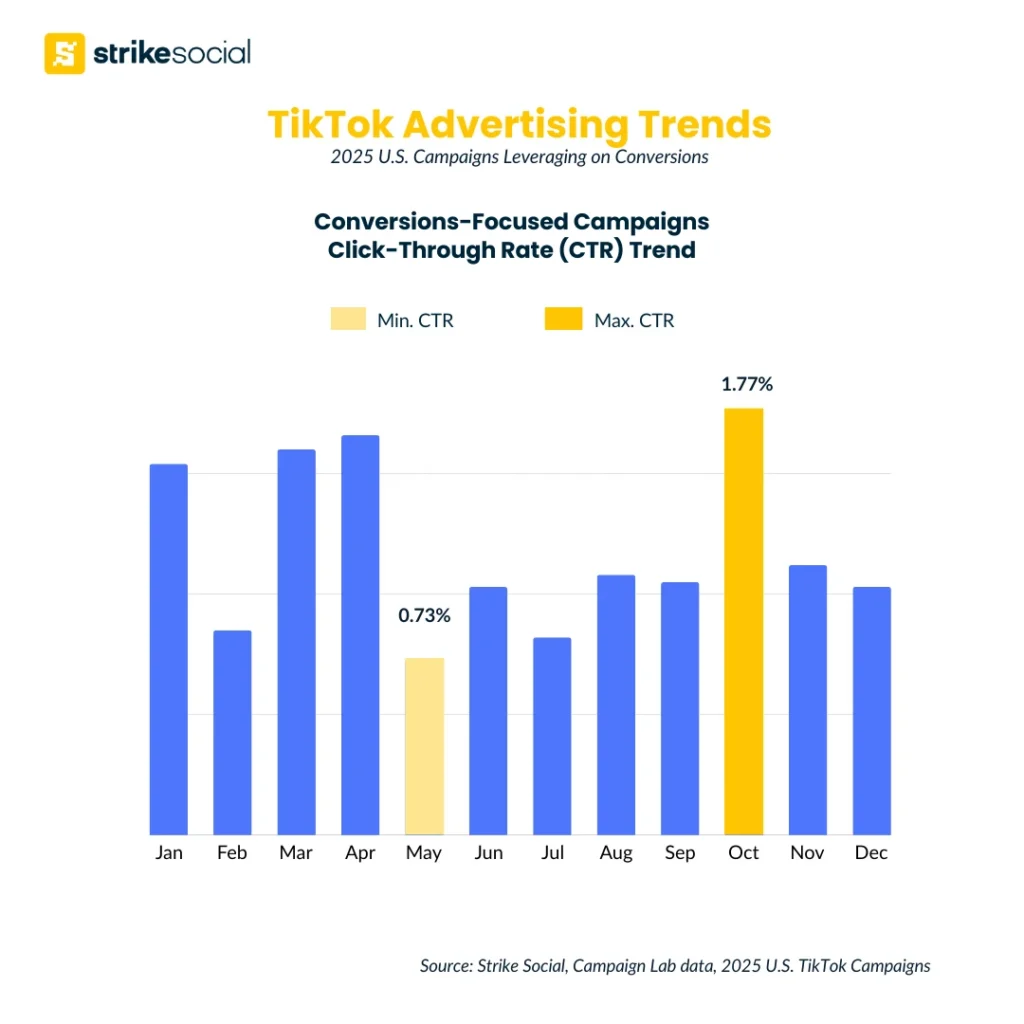
Takeaway: If you’re running conversion-focused ads and sitting around 0.9% CTR in Q4, you’re at the lower end of performance and should prioritize TikTok ads optimization to improve CTR during high-volume periods.
Diagnosing Why Your TikTok Ads CTR Is Low
When an ad underperforms, the default reaction is often to blame the algorithm. In reality, low TikTok ads CTR almost always points back to the creative, not delivery. Before making structural changes inside TikTok Ads Manager, run through this three-point diagnostic checklist.
1. The 3-Second Hook Failure
Symptom: High impressions, extremely low watch time, low TikTok CTR.
On TikTok, the “Hook Rate” (the percentage of people who watch the first 3 seconds) is the gatekeeper to your CTR. If users don’t stop scrolling, they cannot click.
Common hook failures include:
- A “millennial pause” or silence at the start
- Slow logo reveals
- Brand-first intros with no immediate value
Immediately introduce the conflict or value proposition. Furthermore, audit the first three seconds of your video ad. Specifically, examine your 2-second and 6-second views to understand how long people are actually watching.
If these drop sharply at the start, your TikTok ad CTR problem isn’t about optimization; it’s about attention.
2. Creative Fatigue
Symptom: Strong initial performance (e.g., 1.5% CTR) followed by rapid decline (e.g., 0.4% within 7–10 days).
TikTok burns through creative faster than any other paid social platform. A video that performs well today can decay within days as frequency increases and audience saturation sets in.
As creative fatigue increases:
- Users scroll past familiar ads
- Ad click-through rates decline
- CPMs rise as TikTok is forced into more competitive auctions to find “new” viewers
If you run TikTok campaigns with limited creative rotation, the algorithm will eventually penalize you for serving stale content. Sustainable TikTok ad optimization requires producing enough variations to support weekly creative refreshes rather than monthly ones.
3. “Ad-Like” Aesthetics
Symptom: High production value, low engagement, weak CTR.
Highly polished ads aren’t inherently bad, but on TikTok, they often underperform. Users are conditioned to scroll past content that looks like a traditional commercial.
Ads that struggle tend to share these traits:
- Studio lighting and scripted delivery
- Heavy branding upfront
- TV-style pacing
By contrast, brands that improve their TikTok ads CTR consistently lean into:
- Influencer ads
- Native, UGC-driven formats
- Content that feels organic, imperfect, and platform-native
If your creative doesn’t look like it belongs on TikTok, users won’t treat it like it does.
Further Reading

Designing an Influencer Marketing Approach That Works
Influencers bridge the gap between brands and potential customers by presenting products in an authentic, trusted context. A well-designed influencer strategy ensures your message feels native in social feeds, increasing engagement and performance. Beyond visibility, influencer campaigns can amplify your overall media plan by combining creativity with measurable results.
High TikTok Ads CTR but No Conversions: What’s Going Wrong?
You see a strong TikTok CTR, say 2% or higher, but ROAS is weak, and sales don’t follow. You’re essentially wasting budget on clicks that aren’t converting into sales. This common issue, where high click volume (CTR) doesn’t translate to revenue, typically signals a few specific disconnects in your funnel.
The Clickbait Trap
If your ad promises something the product doesn’t deliver, you create a “Curiosity Gap” rather than “Purchase Intent.”
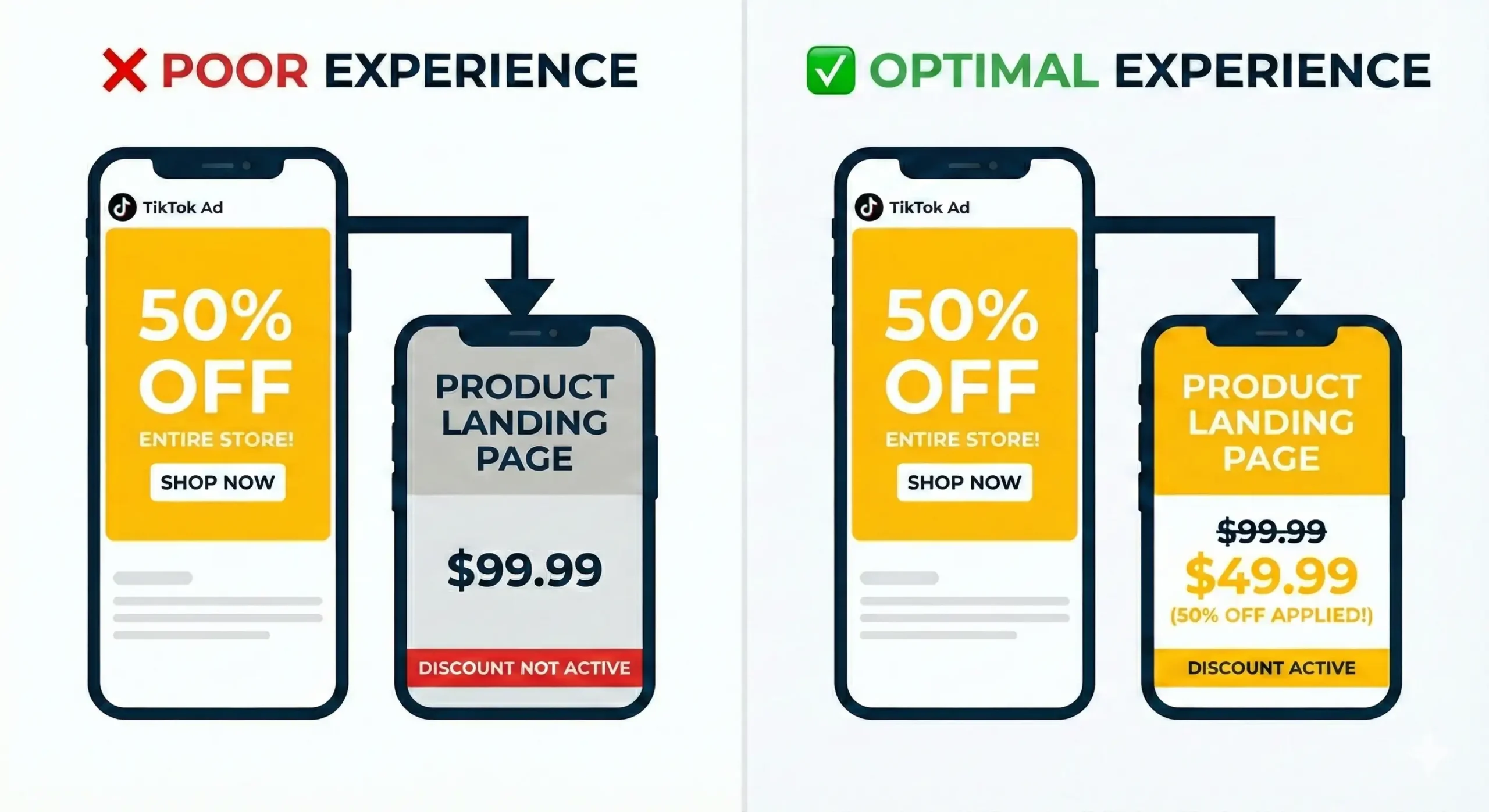
This happens when the ad hook is irrelevant or misleading, causing users to click out of confusion or curiosity rather than genuine interest in the product. For instance, using a shocking, viral video hook unrelated to the product, or promising a discount that doesn’t apply on the landing page, will lead to immediate bounces.
Therefore, your ad hook must be directly relevant to the solution you are selling, and the offer or product shown in the ad must precisely match what users see on the landing page or shop.
The Landing Page (LP) Congruency Gap
When a user clicks a TikTok ad, they are in a fast-paced mindset. If they land on a slow-loading, text-heavy webpage, the vibe shift is too jarring. For each additional second of website load time, your conversion rate drops by an average of 4.42%.
Use the exact same headlines, or very closely related variants, from the TikTok ad (the text overlay, the voiceover hook, or the ad’s main value proposition) on the dedicated landing page. The user must immediately recognize the destination as being directly relevant to the ad they just clicked.
Moreover, landing pages should have a single purpose (e.g., collect an email, facilitate a purchase, or start a free trial). Avoid distracting navigation menus or multiple CTAs. Place the primary Call-to-Action button prominently “above the fold” (visible without scrolling) and use contrasting colors to make it stand out. The conversion funnel must be as short as possible.
The Wrong Optimization Objective
When you run TikTok ads, the objective you select dictates who TikTok shows your ads to.
- Traffic Objective: Select this objective when the goal is to drive website visits, gather data for retargeting, or simply increase overall traffic. TikTok optimizes to find users highly likely to click links, who often behave like “window shoppers.”
- Conversion Objective: Optimize for this objective in bottom-funnel campaigns when the goal is to drive actual purchases or form submissions. TikTok will target users who are most likely to complete these desired actions, such as checking out their baskets and finalizing a purchase.
If you have high CTR but low conversions, check if you accidentally optimized for “Traffic” or “Landing Page Views.” You are getting exactly what you asked for: clicks, not customers.
Creator-Led TikTok Ads Capture Gen Z and Parent Shoppers
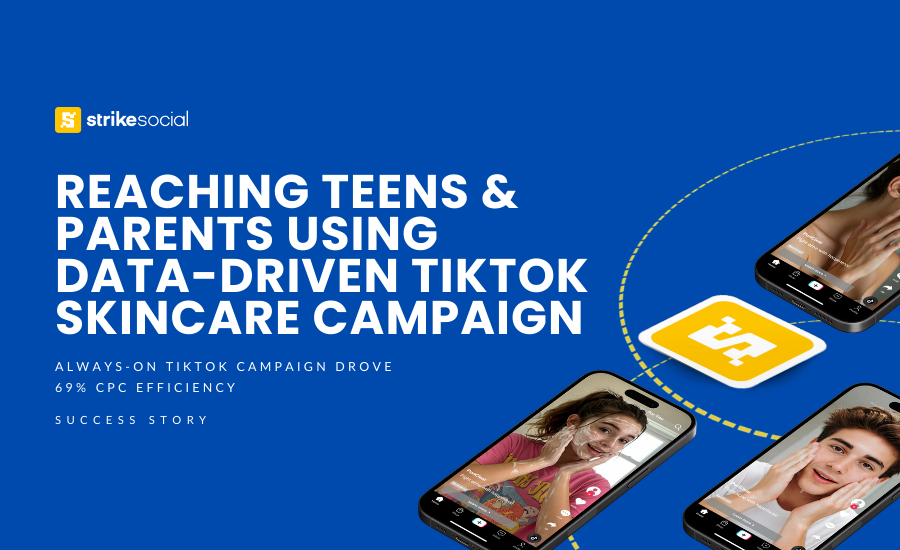
To connect with Gen Z consumers and their parents, a leading skincare brand partnered with Strike Social for a TikTok campaign designed for performance. The focus was driving relevance on a youth-first platform while maintaining brand credibility and traffic to priority product pages.
The always-on campaign integrated TikTok native targeting with site retargeting and lookalike audiences. Targeting the Gen Z demographic accounted for 91% of spend and delivered 96% of clicks. With creator-driven videos and precision targeting, the brand achieved high engagement at a lower-than-expected cost.
How to Increase and Improve TikTok CTR
Once you’ve diagnosed why your campaign is underperforming, the next step is execution. These best practices are proven to increase TikTok CTR and optimize performance.
Utilize Spark Ads
If you’re running an influencer marketing campaign, Spark Ads lets you boost organic posts directly as ads. By retaining likes, comments, and shares from the original post, you have established social proof that signals to users the content is worth their attention.
To maximize results, identify organic videos with high completion rates in the influencer’s analytics, then promote them via the TikTok Ads Manager and incorporate them into your click or conversion campaigns.
The Hook-Body-CTA Structure
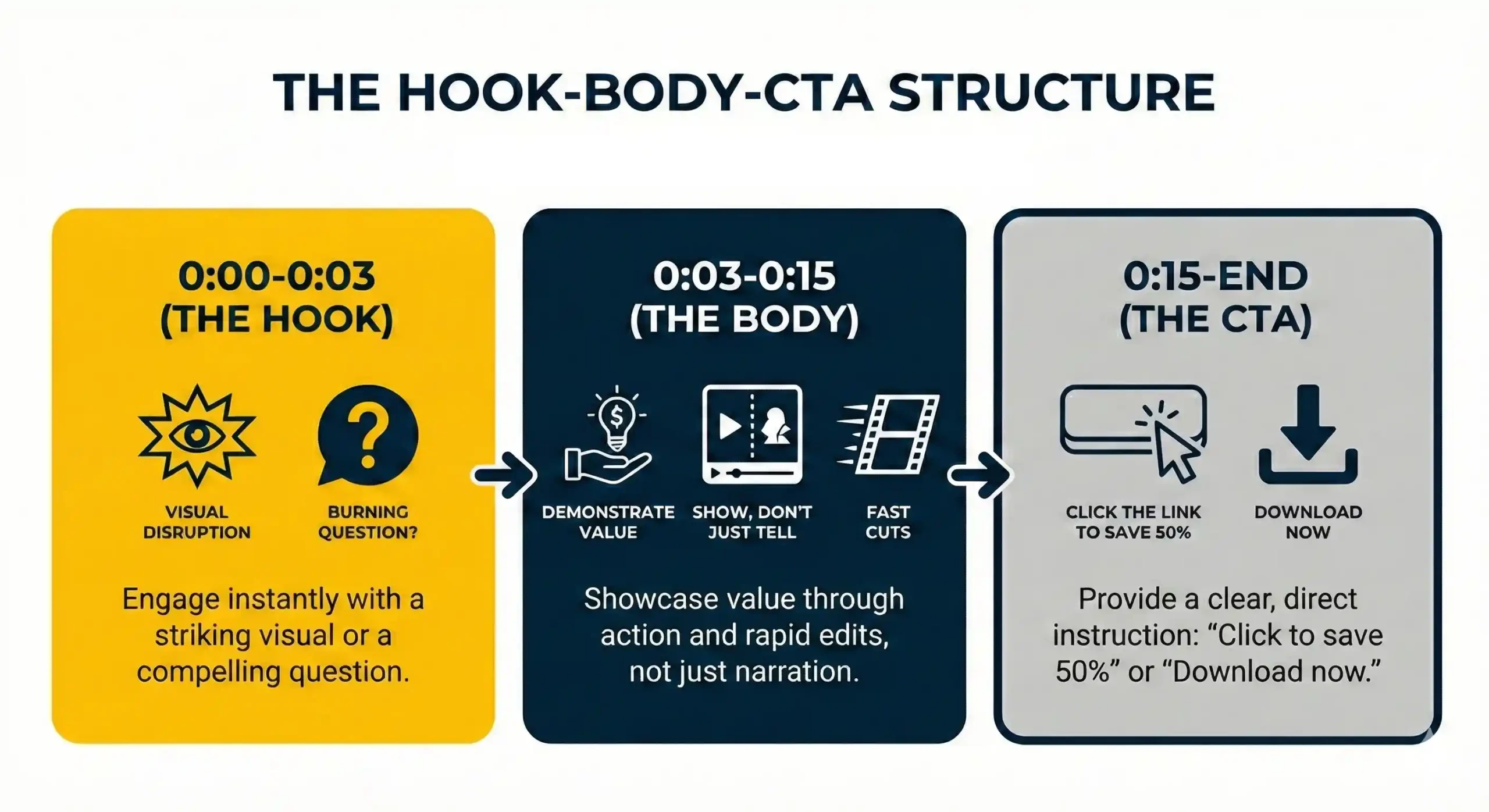
To optimize TikTok ads for higher CTR, structure your video for retention by using the hook-body-CTA framework:
- 0:00-0:03 (The Hook): Visual disruption or a burning question.
- 0:03-0:15 (The Body): Demonstrate the value. Show, don’t just tell. Use fast cuts.
- 0:15-End (The CTA): Tell them exactly what to do. “Click the link to save 50%” or “Download now.”
Refresh Audiences to Combat Ad Blindness
Even a strong creative can underperform if your audience pool has been exhausted. When CTR starts to dip, consider refreshing your audience targeting. Broaden interest categories while emphasizing high-purchase-intent users for conversion-focused campaigns.
TikTok’s algorithm is adept at identifying relevant users based on behavioral signals. It can even suggest Interests and Behaviors as part of your ad group setup, helping you reach new, receptive audiences without relying solely on rigid demographic criteria.
Remember that CTR directly affects the cost of advertising on TikTok. Higher CTR signals strong engagement to the algorithm, reducing the cost of traffic and improving campaign efficiency. Conversely, ads with low CTR require higher bids, which unnecessarily drive up costs. By optimizing your TikTok ads and applying these strategies, you not only increase clicks but also enhance overall campaign performance and cost efficiency.
Turn TikTok Ads Into Revenue With Smart Optimization
Your TikTok ads CTR is a compass that shows whether your creative resonates, your audience is engaged, and your offer is compelling. But a high click-through rate alone is not enough. Optimizing for CTR in isolation can quickly drain your budget if clicks don’t translate into conversions.
The key is to diagnose the root cause of underperformance, whether it’s the hook, creative format, audience targeting, or the landing page experience. Once you identify the issue, apply TikTok ads optimization strategies to turn attention into meaningful actions, driving both clicks and revenue.
In-house teams often struggle with the simultaneous challenge of managing ongoing campaigns and performing deep analysis of creative and overarching marketing strategies. This is precisely where a specialized TikTok advertising agency can add significant value, helping brands achieve consistent, sustained growth with their paid social ads.Stop the guesswork and start efficiently scaling. Partner with us to manage high-volume TikTok ad campaigns for maximum clicks and conversions. Contact Strike Social today.

Article by
Lee Baler, Strike Social’s VP of Sales & Strategy
Lee leads global strategy, helping clients and agencies maximize YouTube and paid social performance. Constantly tracking industry trends, he translates insights into strategies that help brands stay competitive and achieve sustained profitability.


