

Key Takeaways
- 7 hard truths about paid social advertising: The realities detailed below can either confirm your current approach to social media advertising or force you to confront how you need to change your strategy going forward.
- No to quick fixes, yes to actionable strategies: Magic doesn’t exist in this space. Consistent organic posting and engagement are essential to effectively infiltrate the algorithm and gather the data needed to significantly improve ad performance.
- Client management proves highly critical: While media buying skills are highly essential, an agency’s greater value often lies in its ability to effectively communicate performance to clients, such as communicating how a 28x ROAS was achieved and the strategy for sustaining it. This communication skill frequently outweighs the mere display of successful metrics.
Jump to Section
- 7 Hard Truths About Social Media Advertising
- 1. Paid Ads and Organic Foundation Must Work Hand-in-Hand
- 2. The Best Marketing Doesn’t Look Like Marketing
- 3. Creative Burnout is Fast, and Ad Fatigue is Faster
- 4. Anchor Your Strategy With 3 Key Metrics
- 5. Stop Waiting for Inbound. Hunt Where Your Buyers Are.
- 6. Knowing When to Halt Ads During Global Conflicts is Crucial
- 7. Client Management is 80% of the Job; Technical Skill is 20%
Hard Truths About Social Media Advertising and Building a Realistic Strategy
Social media advertising can be ruthless, and that’s why facing the hard truths is the only way to survive. Our recent take on a Reddit thread confirmed what we’ve known for years: the traditional playbook is obsolete.
Gone are the days of simply pouring huge budgets into a Facebook campaign with rigid demographic targeting. Algorithms are shifting unpredictably, and the rise of AI ad automation is fundamentally changing how powerful ads are created.
Today, we reveal the real challenges top-tier agencies face daily in social media marketing. Forget the common misconceptions about this industry; these are the essential truths that actually govern the world of advertising.
1. Paid Ads and Organic Foundation Must Work Hand-in-Hand
There is a persistent truth about social media marketing that many brands refuse to accept: paid social media advertising and organic presence are not mutually exclusive; they must work together.
While paid ads are incredibly effective at injecting immediate visibility and kickstarting engagement, driving that traffic to a profile with no organic strength, social proof, or ongoing content is essentially a guessing game. It lacks the data needed to effectively train platforms like Meta to find their ideal audience, resulting in wasted ad spend.
Conversely, relying solely on organic reach can seem slow for modern scaling. By layering on paid social ads as organic does its magic, ad costs can be typically lower. Why?
- Platforms Reward Trust: Algorithms on networks like Instagram and TikTok favor accounts with a history of strong engagement signals.
- User Behavior: Users who see a compelling ad will often check the brand’s social profile or search for the brand directly on the platform to confirm legitimacy and evaluate existing content and engagement.
Organic strategy builds essential trust. Paid strategy acts as an amplifier. Launching social media ads must be built on that foundation, so you can collect data first and direct your paid ads accordingly.
2. The Best Marketing Doesn’t Look Like Marketing
If your social media marketing strategy relies solely on polished, corporate studio shoots, it’s an outdated creative idea that needs refreshing. A simple video filmed by a 22-year-old with an iPhone in their kitchen can often outperform a polished, professionally shot brand ad.
The ads that perform best are the ones that feel the most human. This is one of those hard truths about social media advertising that no one talks about: audiences are tired of unattainable perfection. They want to see genuine interaction, the product’s real-life use, and even the “messy” parts of daily life.
High-converting creative frequently includes:
- Behind-the-scenes footage of a product prototype.
- An honest review of an influencer using the product.
- A founder demonstrating or trying out their own product (just look at McDonald’s viral video that they used to their advantage).
The most effective social media advertising blends seamlessly with the platform’s native content. The ad algorithm rewards brands that behave like genuine content creators within their environment.
3. Creative Burnout is Fast, and Ad Fatigue is Faster
Nobody wants to admit how brutally fast ad fatigue hits today. This is the hard truth about advertising: what worked brilliantly three weeks ago can tank completely today.
To succeed with paid social media ads, your primary mindset shift must be moving from relying on isolated genius ad concepts to instituting a systematic, industrialized process for creative testing. A single ad idea will not sustain your performance for an entire quarter. You need a continuous, aggressive cycle:
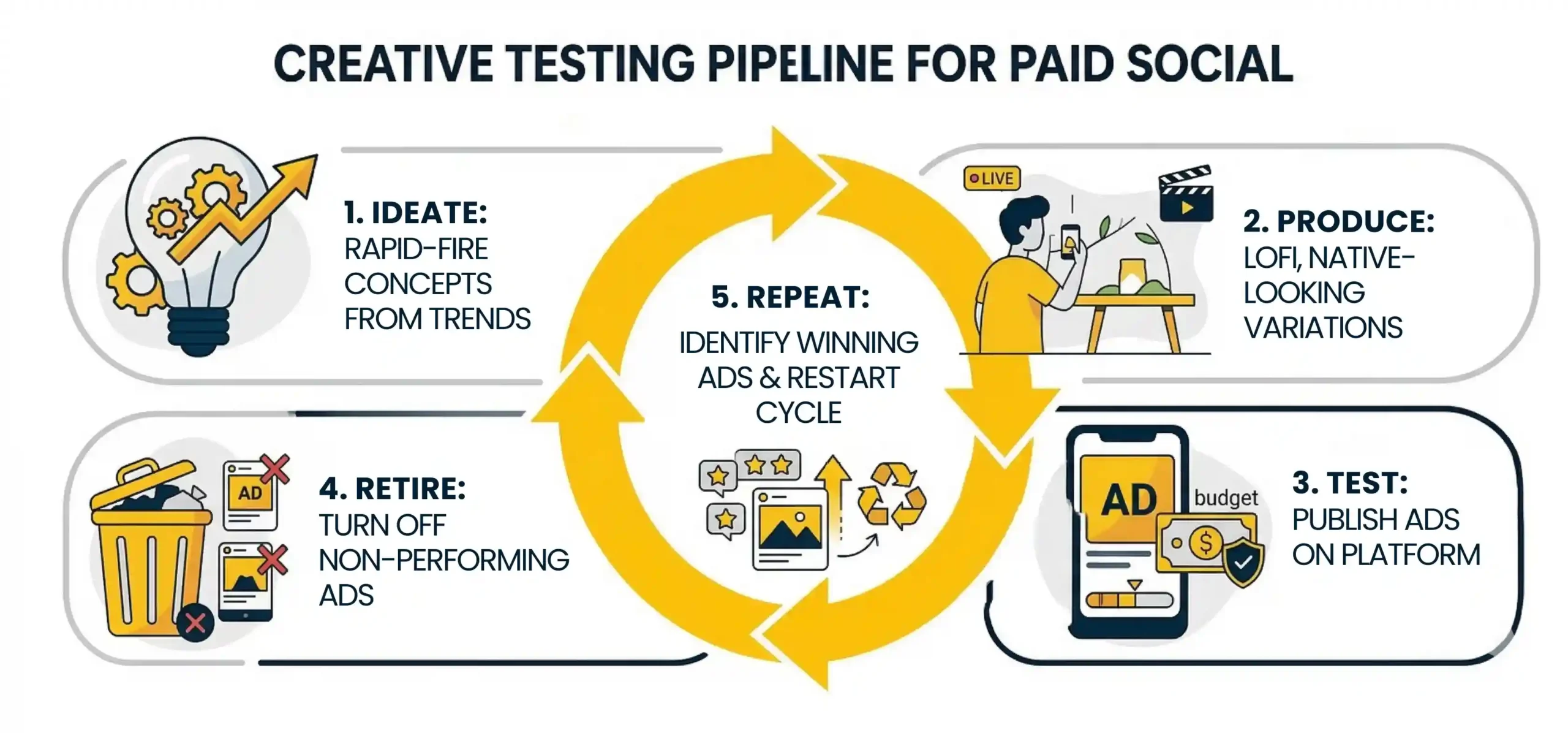
- Ideate: Generate quick-hit concepts based on current platform trends.
- Produce: Create lo-fi, authentic-looking ad variations (native-style content).
- Test: Launch campaigns with controlled budgets on the ad platform.
- Retire: Immediately eliminate underperforming assets.
- Repeat: Build upon the successful ads and restart the production cycle.
The teams that win at social media marketing iterate faster as trends come and go. Creative volume is the ultimate hedge against algorithm volatility.
Further Reading
How Merchant Center Powers High-Performing Ad Creatives
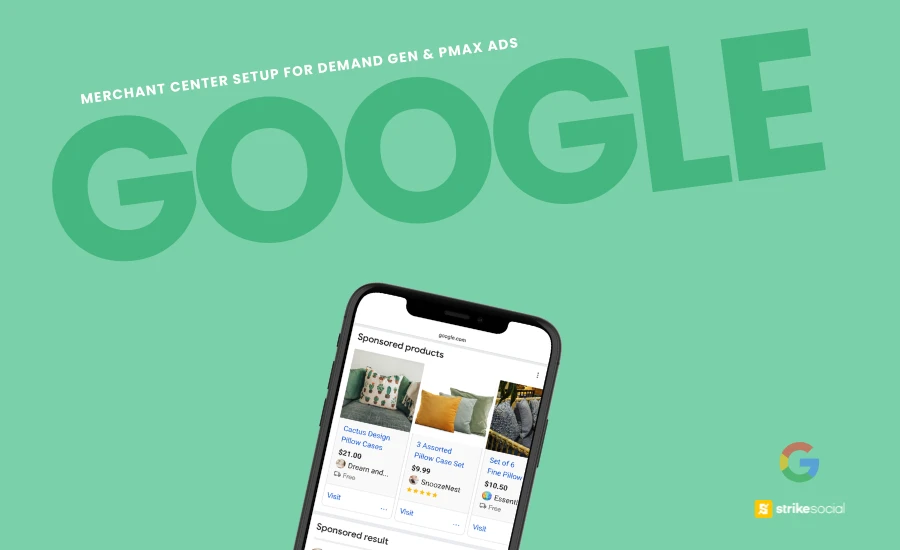
In automated campaigns like Performance Max and Demand Gen, your product feed is what shapes the final ad creative. From images to titles and pricing, every element pulled into your ads comes from Merchant Center. The more refined your feed, the more polished and compelling your creatives will appear across placements.
4. Anchor Your Strategy With 3 Key Metrics
Impressions, click-through rates, engagement rates, conversion rates, and video completion rates: looking at all these metrics can make you anxious and reactive.
When establishing what social media strategy really requires, you must establish a data hierarchy. Pick three “North Star” key metrics tied directly to your business goals to guide your primary decisions. For example, if your goal is direct-response revenue, your dashboard should prioritize:
To define a successful social media marketing strategy, you must select and commit to three key metrics that directly align with your specific business objective. For example, if your goal is direct-response revenue, your dashboard should prioritize:
- CPA (Cost Per Acquisition)
- ROAS (Return on Ad Spend)
- Thumb-Stop Ratio
In traffic or video campaigns, secondary metrics like View Rate (VR), View Rate to 2 seconds (VR2s), and Click-through Rates (CTR) also provide vital diagnostic context on how campaigns are performing. However, primary focus should remain on your core three metrics to make confident, proactive decisions rather than reacting to too many data points simultaneously.
5. Stop Waiting for Inbound. Hunt Where Your Buyers Are.
Too many marketers treat paid social ads as a passive broadcasting tool and wait for inbound leads to magically roll in.
Stop waiting for your target audience to come to you. You need to actively hunt where your buyers already are.
Your most valuable audience members are right now on platforms like Reddit, in niche Facebook groups, and on industry forums, actively asking for solutions to their problems. Most digital marketers waste time on theoretical strategies precisely because they aren’t engaging directly with customer conversations.
The strategy is simple: Intercept, Solve, Convert.
- Monitor the communities: Identify what your demographic needs or consistently asks for help with.
- Find the patterns: Pinpoint the recurring questions and deepest pain points.
- Show up with answers: Tailor your ad creative and organic outreach not to general themes, but to solve those exact, real-time problems.
Modern social media advertising is defined by intercepting high-intent conversations. That is the most efficient way to build trust, move beyond passing interest, and secure actual engagement and conversions.
6. Knowing When to Halt Ads During Global Conflicts is Crucial
Here is a sobering hard truth about advertising on social platforms: sometimes, the best campaign move is to turn your campaigns off.
Approaching paid ads during wartime or times of global conflict requires extreme emotional intelligence. You have to “read the room.” We saw this highlighted perfectly in a recent PPC Reddit thread, where one user noted that a European travel board has cut its funding by 50%, and sometimes that’s what you have to do to secure brand safety.
Macroeconomic and geopolitical events dictate micro-level ad spend. Launching a cheerful, insensitive promotion alongside trending news about a tragedy is a swift path to destroying your brand equity.To mitigate the risks while still addressing client and brand necessities, brand safety and suitability are key. Tools like inventory filter controls help restrict sensitive content from appearing next to your ads, while channel and placement exclusions ensure you don’t appear in news or channels that focus on these topics.
7. Client Management is 80% of the Job; Technical Skill is 20%
Even with a 5x ROAS, the value of your work is entirely lost if you fail to translate that data into meaningful business outcomes for the client or proactively guide them through the strategic process.
This is the ultimate hard truth about paid social ads: client management is 80% of the job. Technical media-buying skills are only 20%.
Stakeholders are concerned with business results. The most effective digital marketers are not just technical wizards sitting behind dashboards; they are expert translators. They take complex data and turn it into a clear, reassuring narrative that builds a true partnership.
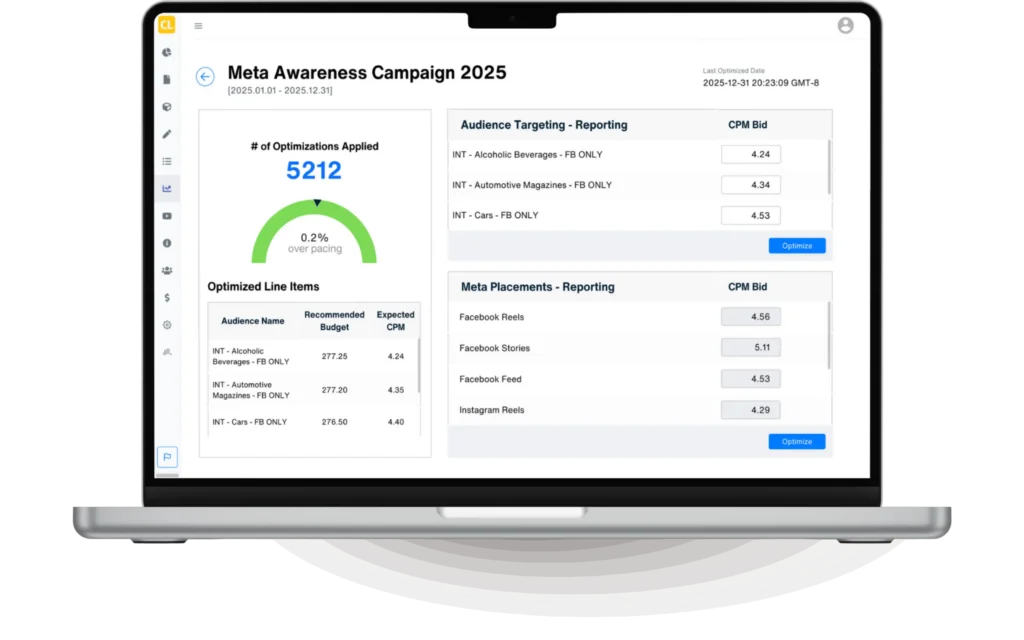
This dual focus is the core of Strike Social’s approach. We combine our media buyers’ expertise with specialized ad tech that automates the tedious aspects of optimization, such as large-scale data pulling and identifying optimization opportunities.
Internalizing the Hard Truths and Taking Action
The hard truths about social media advertising are often ignored by most marketers. These truths are anything but glamorous, demanding a commitment to solid foundational work, embracing authentic, imperfect ad creatives, and rigorous discipline. However, accepting these realities is the crucial distinction between agencies that merely burn ad spend and those that deliver predictable, scalable revenue.
The era of easy wins is over. It’s time to stop relying on hacks and start building a resilient marketing infrastructure. Discover how Strike Social can help you build smarter campaigns: request a demo today.

Article by
Lee Baler, Strike Social’s VP of Sales & Strategy
Lee leads global strategy, helping clients and agencies maximize YouTube and paid social performance. Constantly tracking industry trends, he translates insights into strategies that help brands stay competitive and achieve sustained profitability.


