

TL;DR: Google Marketing Live 2026 at a Glance
Here’s a quick look at the key takeaways from Google Marketing Live 2026 that you need to know:
- Conversational Discovery Ads: Ads are now integrated into AI Mode as helpful, reasoning answers.
- AI Max Expansion: AI Max is officially rolling out to Shopping and Travel to capture complex, long-tail queries.
- AI Brief: Steer AI Max and Performance Max using natural language guardrails to protect your brand voice.
- Universal Commerce Protocol (UCP): Frictionless native checkout directly from the SERP via Universal Cart.
- Ask Advisor: A unified, cross-platform AI co-pilot spanning Google Ads, Analytics, and Merchant Center.
- Multimodal Asset Studio: Generate text, images, and video from a single prompt using Gemini Omni.
- Demand Gen in Maps: Reach high-intent local audiences by serving Demand Gen ads directly in Google Maps.
- Creator Partnerships Boost: Seamlessly pull organic YouTube creator videos into your paid campaigns.
- Meridian Studio: Enterprise-level Marketing Mix Modeling (MMM) built on Google Cloud for unified measurement.
- Qualified Future Conversions (QFC): A new predictive metric linking upper-funnel ad views to downstream sales.
Google Marketing Live 2026: 10 Key Announcements That Will Shift Paid Media Strategies
The Google Marketing Live 2026 event has officially wrapped, and this year, we have collated the 10 key announcements that will shift paid media strategies moving forward.
As Google’s AI models evolve from simply generating chat responses to executing complex, multi-step workflows that aid both consumers and advertisers, it’s clear we are entering the age of agentic commerce. As you dive deeper into the Google Marketing Live announcements we have compiled, you will see the massive leap in how you can scale, measure, and drive revenue within Google’s networks.
Here’s your repackaged Google Marketing Live 2026 recap, highlighting the highlights and outlining your next steps to adapt.
The Shift in Search and AI Automation
Users are now using Google AI to search for text, images, and video simultaneously, meaning brands must learn how to best leverage AI automation to capture this newly fragmented intent.
1. Capture High-Intent Traffic with Conversational Discovery Ads
Traditional Google search ads are evolving from mere phrases to full-on discovery stories that users input that help them to get to the most definite answer they are looking for. With the rise of AI Mode, users are asking complex, multi-layered questions that keywords alone cannot capture.
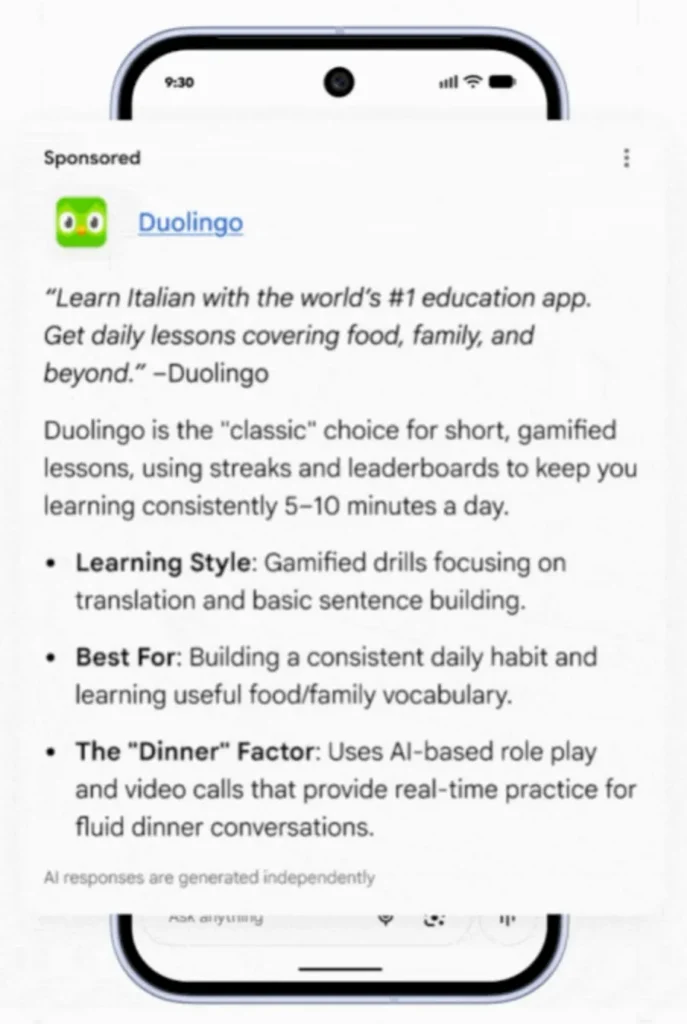
To match this, Google introduced Conversational Discovery ads and Highlighted Answers. Rather than just displaying a link, Gemini evaluates the user’s specific context and dynamically writes an explainer detailing why your product is the best solution for their unique situation.
37% of consumers use AI tools during preliminary searches to get concise answers and make faster purchase decisions.
* Search Engine Land
75% of people report making faster, more confident decisions when using AI Overviews and AI Mode in Search.
* YouTube, Google Marketing Live 2026
How to optimize Search ads:
- Audit Your Website Architecture: Generative AI pulls from your site content to build these contextual answers. Your product pages must feature robust, specific information rather than generic commodity descriptions.
- Utilize the Google Merchant Center: Keep your product and business listings flawlessly accurate, as Gemini uses this data feed to generate product-specific explanations that best match user queries.
2. Maximize Shopping & Travel Campaigns with AI Max
With AI Max, your campaigns can now better match user intent. Previously released for Search, it is now expanding to Shopping and Travel campaigns.
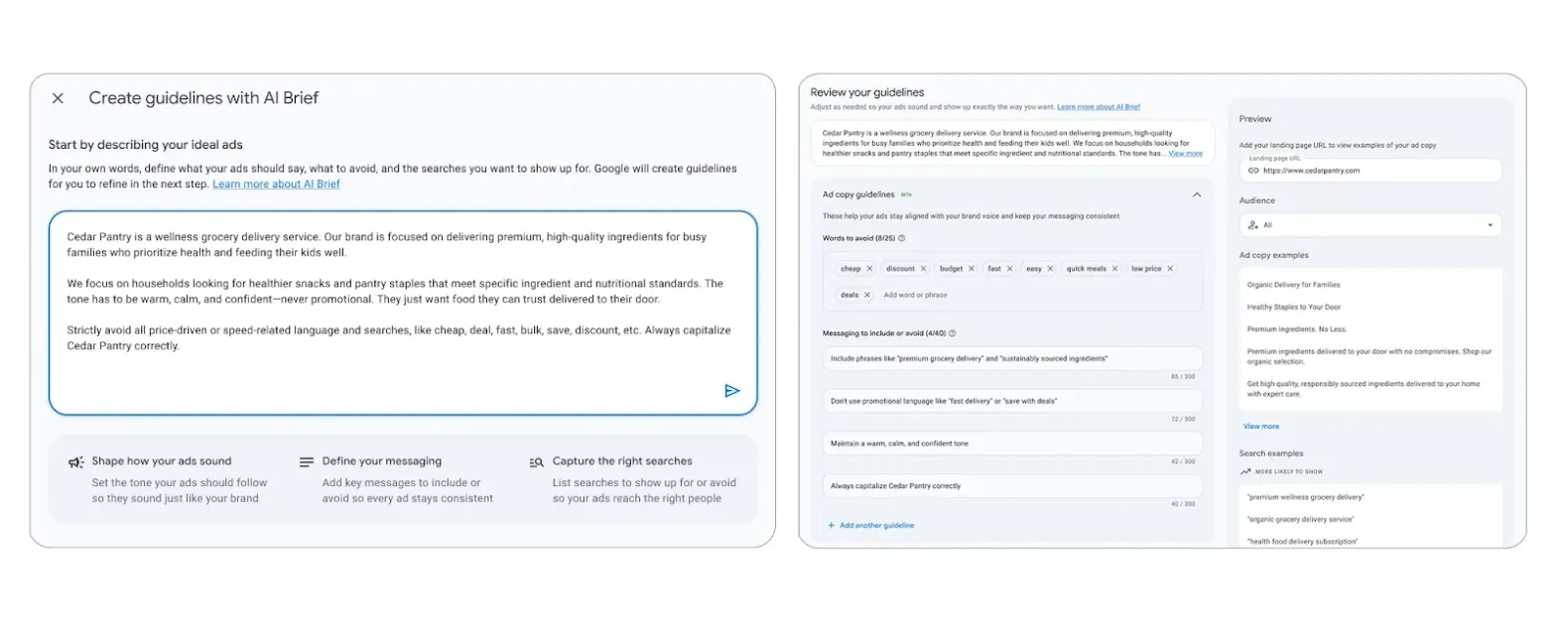
This allows Google Ads to dynamically generate ad copy, select the optimal format, and utilize Final URL Expansion to send users to the highest-converting landing page based on their immediate intent.
With AI Max for their hair and skin care campaigns, L’Oréal saw a 31% lower cost per conversion.
* Think with Google
Advertisers who adopt AI Max or Performance Max see 15% more conversions at a similar ROAS.
* YouTube, Google Marketing Live 2026
Key improvements to Shopping and Travel campaigns:
- Advanced Targeting: Employs broad match and keywordless technology to reach untapped, high-performing queries.
- Dynamic Personalization: Uses text customization and URL expansion to serve the most relevant landing pages and copy.
- Compliance Management: New text disclaimers ensure legally required information, such as disclaimers or warnings, remains visible during URL expansion.
What to do next:
- A/B Test with Shopping: If you are running standard Shopping campaigns, test an AI Max campaign to see how well it captures long-tail conversational queries.
- Campaign Consolidation: Test a unified travel feed in a single AI Max Search campaign and see whether consolidating the campaign is more beneficial than fragmented campaigns.
3. Steer the Machine Using AI Brief
One of the most persistent concerns regarding AI automation is a loss of control over brand safety. Google addressed this directly with AI Brief.
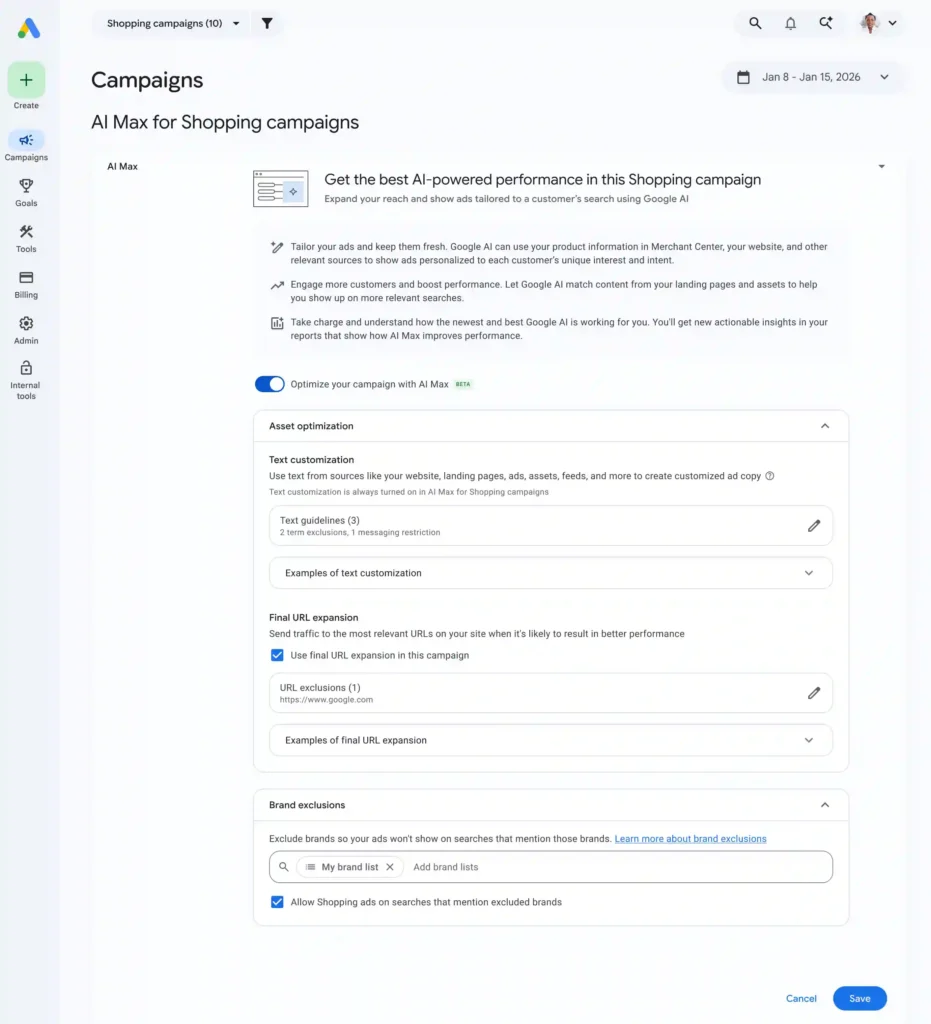
Powered by Gemini, this feature lets you guide the machine with natural language. It features specific guidelines, letting you instruct the AI on what ads should or shouldn’t say, and which searches to capture or avoid:
- Messaging Guidelines: Control ad copy by specifying what should or should not be mentioned, such as price points, bad reviews, or any text that can be crawled within your page, such as related products that may not match the user’s intended query.
- Matching Guidelines: Set boundaries for search intent by defining queries to capture or bypass. For instance, you want to avoid being matched with people who are looking for jobs through your lead-gen campaign.
- Audience Guidelines: Refine targeting to deliver highly relevant messaging to specific groups. By providing an AI brief like “prioritize new releases for women’s shoe shoppers,” you can make sure your ads are relevant to each interaction.
4. Reduce Drop-Off with Universal Commerce Protocol (UCP)
The Universal Commerce Protocol (UCP) is turning standard search results into shoppable experiences. With the new Universal Cart, high-intent shoppers can use native checkout right on the search results page (SERP) and Google Pay for seamless transactions.
Furthermore, Google expanded Direct Offers, allowing brands to dynamically bundle promotions and offer exclusive discounts at the exact moment a shopper is ready to buy.
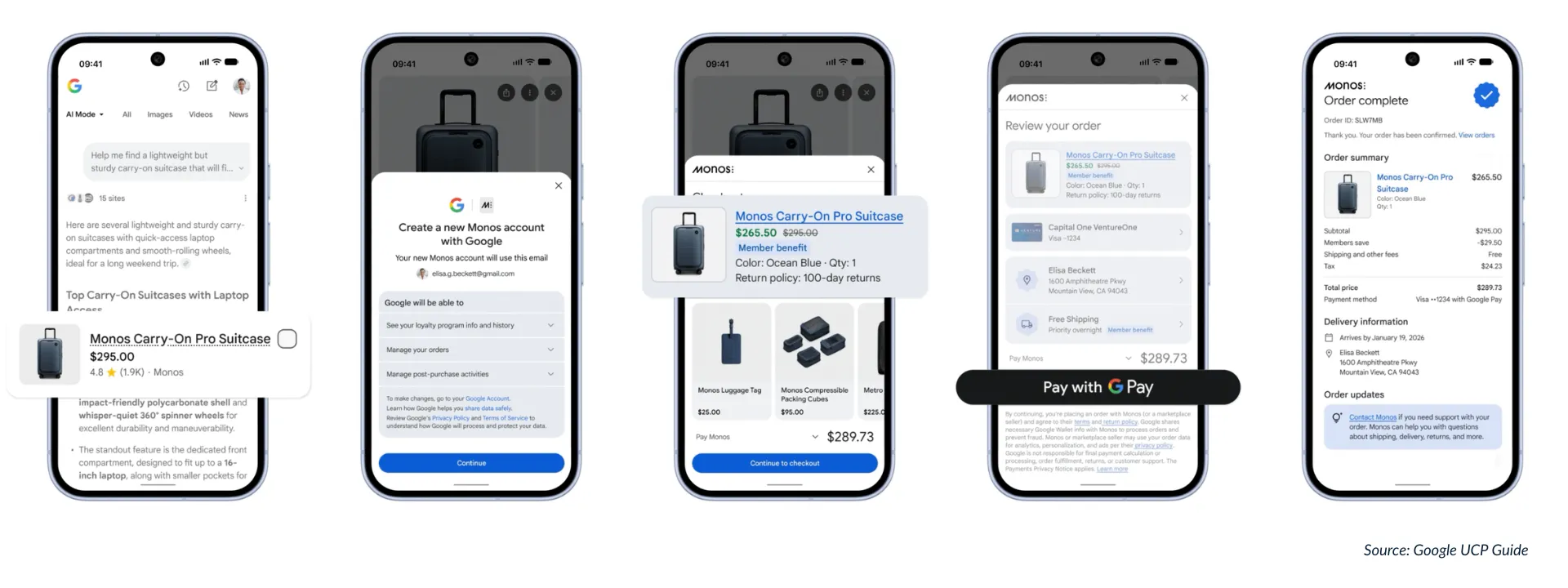
Power up your e-commerce lineup:
- Implement UCP: Work with your development team to integrate the Universal Commerce Protocol. This is the key to unlocking native checkout features in your AI Mode ads, allowing your products to offer direct checkout without users leaving AI Mode.
- Update Your Promos: Make sure your promotions, giveaways, and local coupons are up to date so Gemini can dynamically build customized bundles for high-intent shoppers using Direct Offers.
5. Streamline Operations with Ask Advisor
Ask Advisor is introduced as a new unified, cross-platform AI agent designed to converge and connect data across Google Ads, Analytics, Merchant Center, and Campaign Manager 360.
A core feature of this agent is its “shared memory layer,” which retains your business goals and context as you switch between tasks and platforms, eliminating the need for constant reprompting. This allows Ask Advisor to complete complex cross-platform workflows in a single interaction, without you having to switch screens, run separate prompts, then tell Gemini to “put together this data” to consolidate your insights.
For example, it can pull product details from Merchant Center to help you set up a new campaign in Google Ads, and simultaneously draw data from multiple platforms to explain performance and recommend the next best actions.
Best uses for Ask Advisor:
- Automate Certifications: Use Ask Advisor to turn weeks of manual paperwork into instant approvals. The AI can proactively determine if your business needs a certificate and grant it automatically or help you submit it in one click.
- Troubleshoot Policy Violations: Instead of guessing why an ad was disapproved, ask the advisor to scan your account, identify the policy violation, and provide a clear path to resolution before you appeal.
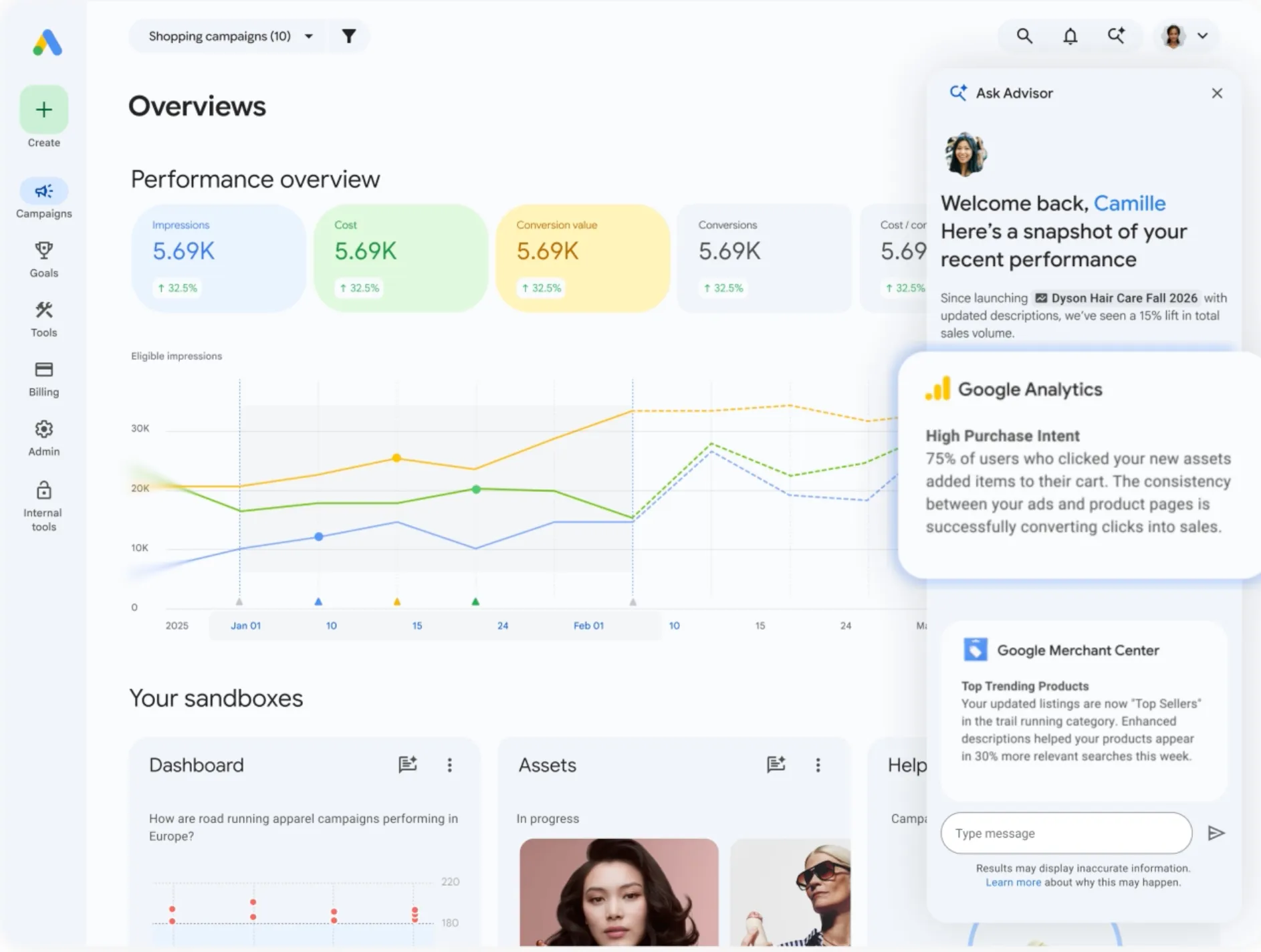
Wondering how to adapt your campaigns to AI Max and Agentic Commerce?
See how Strike Social’s paid media experts can guide your transition, structure your first-party data, and secure your ad performance.
Creative Scaling & Demand Generation
Creative fatigue can be a major challenge, especially for sustained campaign performance. Conversion rates can drop by up to 45% after just 4 repeated exposures to an ad, which means advertisers should always be ready to keep ads fresh before signs of ad fatigue appear.
The biggest updates from Google Marketing Live 2026 give us more options to scale visual content, particularly for video and social-leaning placements.
6. Multiply Production via Multimodal Asset Generation
The integration of the Gemini Omni model into Asset Studio is a huge next step in creating more intricate ad variations; a jump from simple variations off of your existing assets.
Advertisers can now upload a simple marketing brief or website URL, and the AI will generate a complete storyboard, horizontal and vertical video variations, and voiceovers in a single workflow.
Strong creatives can deliver 86% of sales lift in digital ads, so the quality cannot be compromised.
* Advertising Week
Ad creative continues to primarily drive campaign success, influencing 49% of incremental sales.
* YouTube, Google Marketing Live 2026
Level up your ad creatives in Google Ads:
- Anchor with Brand Guidelines: Upload your free-form marketing briefs and brand guide PDFs into Asset Studio to act as a permanent anchor for your brand’s style and colors before generating assets. This helps Gemini Omni avoid veering away from branding and colors.
- 1-Click A/B Testing: Use the new 1-Click “Save and Set Experiment” feature to instantly turn any Performance Max asset edit into a structured A/B test to measure exact performance lift. This allows you to still have control and compare studio creatives compared to AI-generated assets.
7. Dominate Local & Visual Discovery with Maps & Product Feeds
Traditional Google search ads are evolving from mere phrases to full-on discovery stories that users input that help them to get to the most definite answer they are looking for. With the rise of AI Mode, users are asking complex, multi-layered questions that keywords alone cannot capture.
To match this, Google introduced Conversational Discovery ads and Highlighted Answers. Rather than just displaying a link, Gemini evaluates the user’s specific context and dynamically writes an explainer detailing why your product is the best solution for their unique situation.
Utilizing new Demand Gen capabilities:
- Link to Merchant Center: Ensure your product feed is fully linked to your Demand Gen campaigns to automatically turn your ads into a virtual storefront.
- Maximize Channel Controls: You can use channel controls to opt in or out of Maps inventory based on your specific campaign needs and foot-traffic goals. For instance, if you’re launching an online-only product, make sure to opt out.
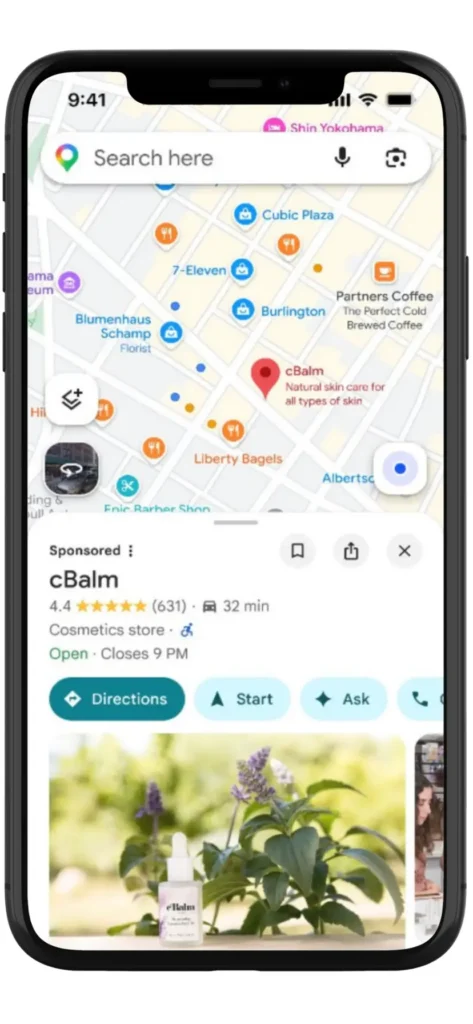
Using hyper-local geo-targeting, Demand Gen proved effective for a financial services brand, exceeding guaranteed link-click delivery by 111%.
* Strike Social case study
Demand Gen campaigns with large product selections typically see a 33% increase in conversions when adopting product feeds.
* YouTube, Google Marketing Live 2026
8. Reach More Communities with YouTube Creator Partnerships
To build the authenticity that millennials and Gen Z consumers demand, advertisers must tap into expanded networks of YouTube content creators. The Creator partnerships boost simplifies this by allowing organic creator videos to be pulled directly into the Google Ads asset picker.
Through Merchant Center integration, product feeds now appear alongside these videos, enabling users to shop with their trusted influencers without exiting the app or interrupting their viewing experience. This feature includes a direct “Shop” call-to-action button, streamlining the multi-touch journey and improving conversion tracking for advertisers.
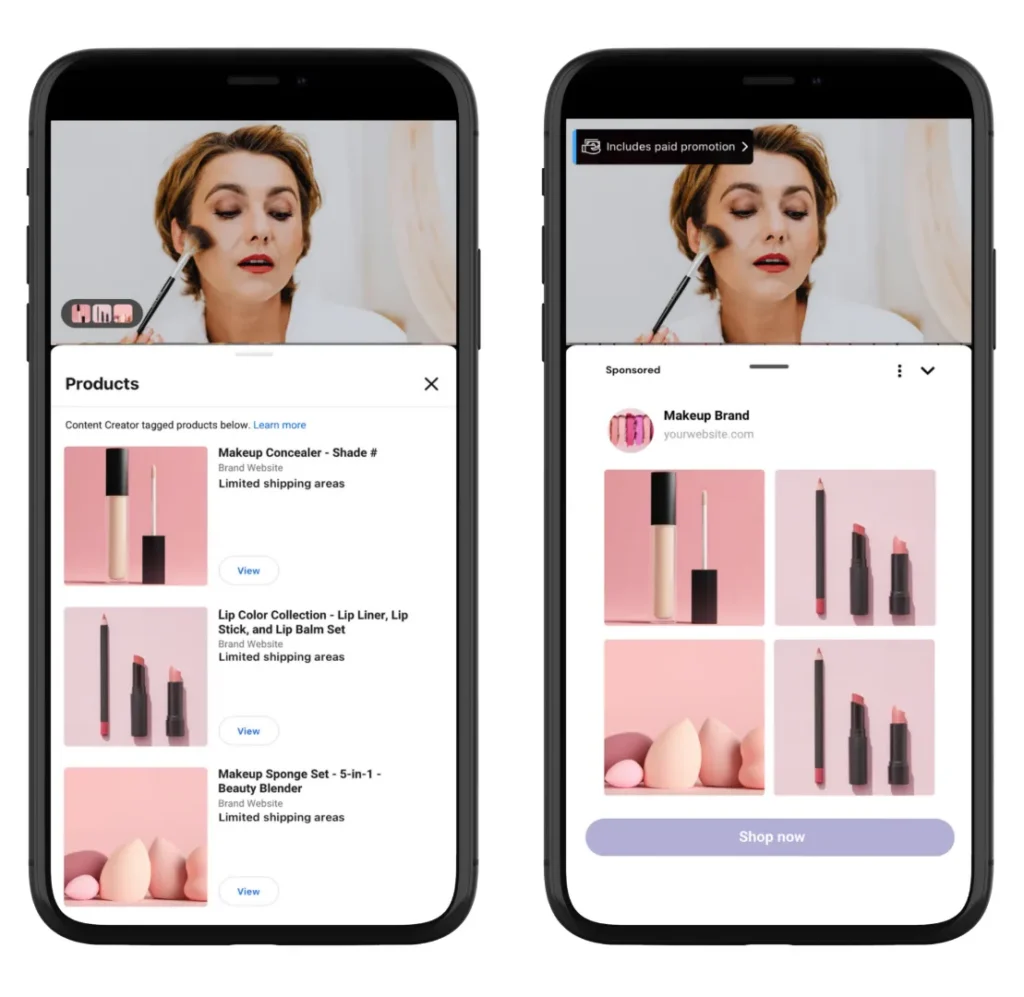
With a strategic mix of creator-led content, a healthcare campaign generated 8x more link clicks than the guaranteed outcomes.
* Strike Social healthcare case study
Adding creator assets to Demand Gen campaigns increases conversion lift by an average of 20% by bridging the gap between discovery and conversion.
* YouTube, Google Marketing Live 2026
Measurement & Analytics in Google Ads Platforms
With multiple touchpoints causing signals to vanish, approximately 35% of attribution data is frequently based on guesswork. A primary pillar of the Google Marketing Live 2026 update is the reinforcement of data foundations, designed to harmonize information across Google’s ecosystem and external marketing channels.
9. Strengthen Data Collection with Meridian Studio & Data Manager
A central focus of the Google Marketing Live 2026 highlights was the critical requirement for robust data integrity. To address this, Google is prioritizing the centralized Data Manager and Google Tag Gateway. These tools provide a privacy-first framework based on confidential computing, ensuring that advertisers benefit from enhanced security and clear data processing transparency.
By routing conversion data directly through a brand’s own server, the Tag Gateway improves accuracy and prevents the data loss often associated with third-party tracking. Furthermore, Data Manager consolidates workflows across Search Ads 360, Google Ads, and Campaign Manager 360 through a unified API connector for audience management and measurement.
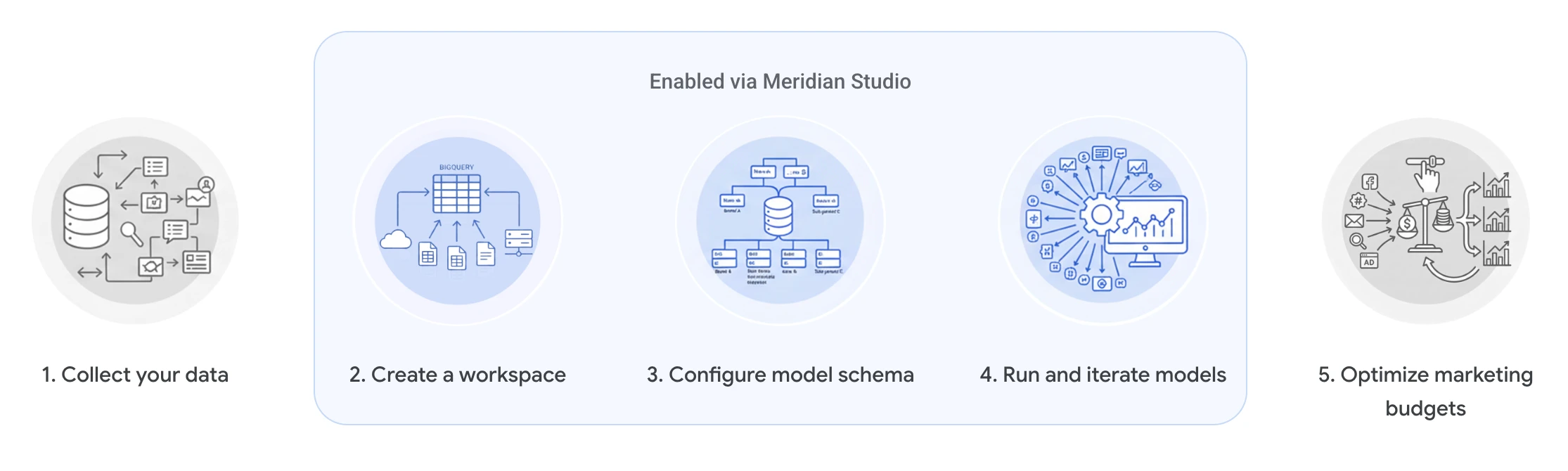
The introduction of Meridian Studio offers enterprise-level organizations open-source Marketing Mix Modeling (MMM) integrated within Google Cloud. This enables sophisticated teams to execute extensive modeling to accurately determine causal impact. While preserving Meridian’s innovative methodology and customizability, the Studio version introduces specialized automation and data security features.
Note: Meridian Studio is accessible as a no-cost module in Google Cloud. Standard Cloud usage fees apply.
10. Forecast Long-Term Value with Qualified Future Conversions (QFC)
Justifying upper-funnel YouTube ad spending has historically been a challenge. However, as the app evolves into a conversion platform, advertisers need better ways to quantify the results of video campaigns.
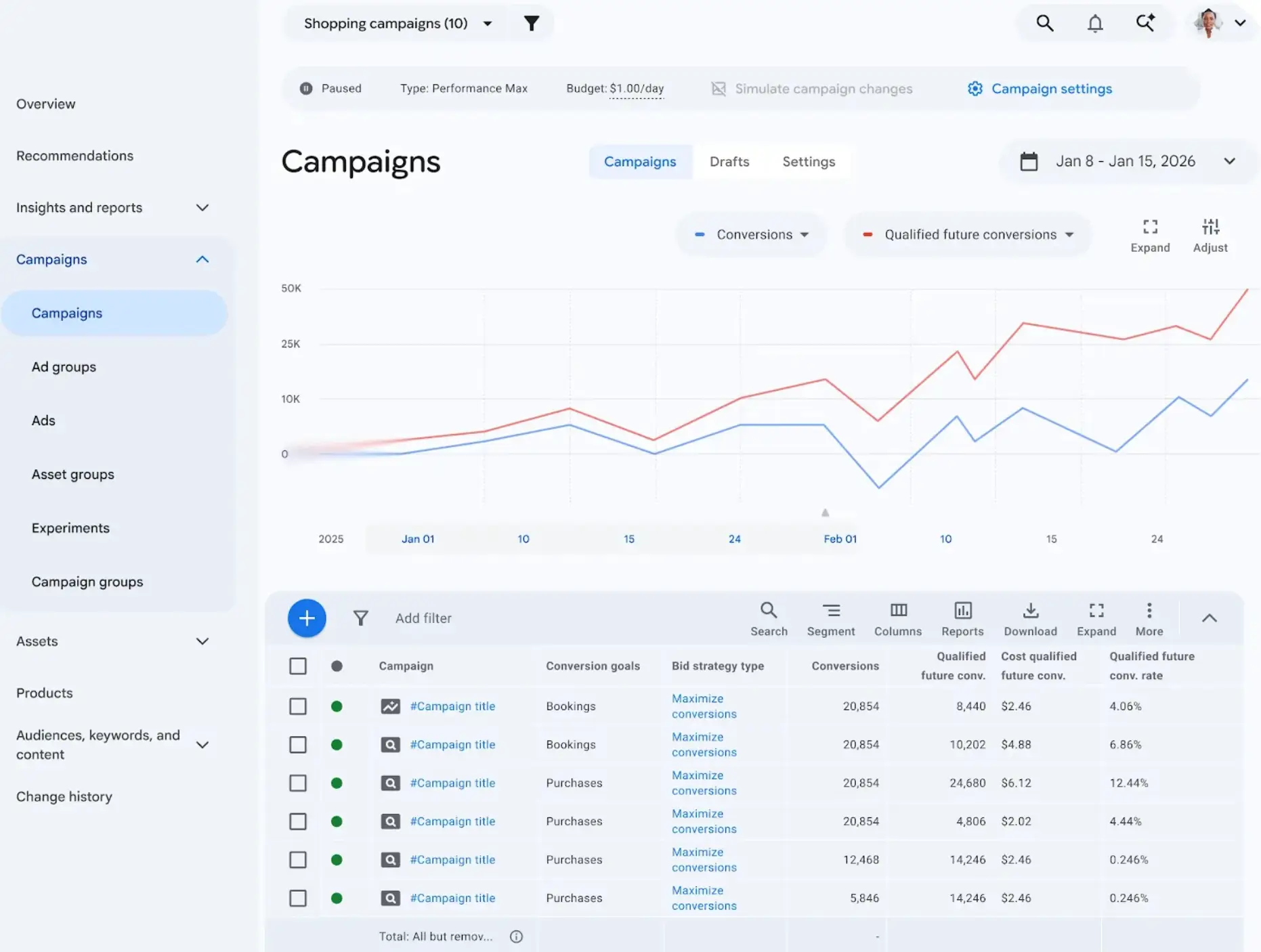
Qualified Future Conversions (QFC) addresses this by using Gemini AI to predict long-term revenue impact. By analyzing actions such as branded searches and site visits up to 6 months in advance, QFC validates the customer journey from discovery to decision. It only credits conversions following a specific “Leading User Action,” providing concrete proof that your top-of-funnel investments are fueling your future revenue pipeline.
Benefits for YouTube advertisers:
- Validated Customer Journeys: Qualified Future Conversions (QFC) connects early discovery to eventual sales by confirming conversions only when an ad view leads to a significant user action. This provides proof of how YouTube ads drive the path from discovery to decision.
- Proactive Strategic Tuning: QFC’s predictive forecasting allows brands to manage campaigns for future growth rather than react solely to historical metrics. For example, Crew Clothing utilized QFC to identify a 70% increase in long-term conversions for a campaign that initially appeared flat.
With Qualified Future Conversions, advertisers gain definitive proof that YouTube effectively guides consumers from initial awareness through to the final purchase. These insights provide YouTube marketers with a more robust data foundation for optimizing and scaling advertising efforts.
Post-Google Marketing Live: What To Do Next
The announcements from Google Marketing Live 2026 make one thing clear: AI is no longer just an additional tool; it is part of the core structure of marketing in 2026. From letting AI Brief steer your ad copy to allowing AI Max to assist your bids across shopping campaigns, Google is rewarding advertisers who can effectively collaborate with and steer these systems to maximize performance.
The role of paid media professionals has shifted away from manually ticking each item on the list on or off, toward setting strategic parameters, building a resilient data foundation, and letting the AI execute.
If you are ready to scale your 2026 campaigns through a blend of expert strategy and advanced machine learning, our team is ready to assist. Reach out to Strike Social today to begin building your future-ready strategy.

Article by
Lee Baler, Strike Social’s VP of Sales & Strategy
Lee leads global strategy, helping clients and agencies maximize YouTube and paid social performance. Constantly tracking industry trends, he translates insights into strategies that help brands stay competitive and achieve sustained profitability.


