

Strike Overview
- Viewing behaviors have changed: Shoppable CTV ads on YouTube bridge the gap between big-screen entertainment and second-screen shopping, with 65% of viewers using another device while watching TV.
- Shop while you watch: With shoppable ads on Demand Gen campaigns, viewers can scan a QR code or send the ad to their phone, making the buying journey seamless across screens.
- Lower CPA potential: By strategically maximizing YouTube CTV inventory, one of our campaigns achieved 30–40% reductions in CPA, highlighting the efficiency of early adoption.
Jump to Section
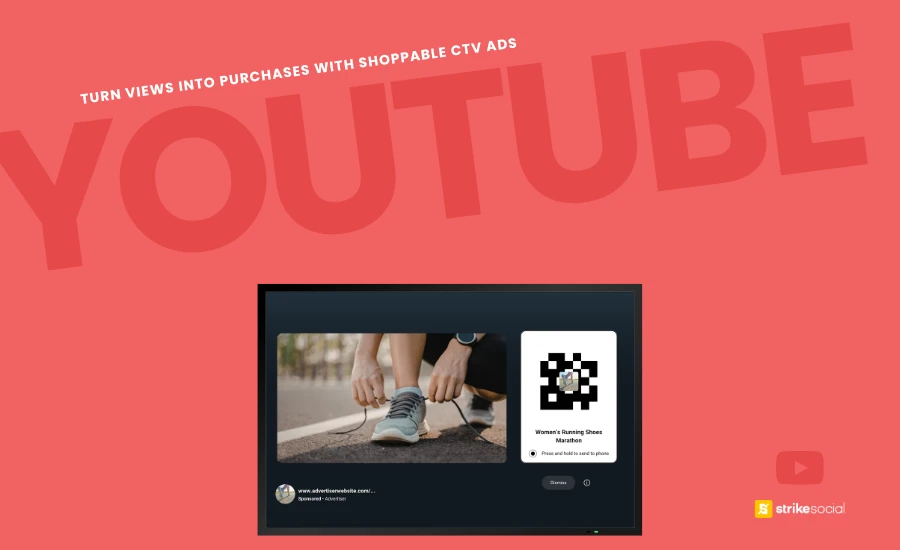
Turn Views Into Purchases With YouTube Shoppable CTV Ads
Shoppable CTV ads are transforming the biggest screen in the house into a direct-response storefront.
For decades, television advertising has been a classic lean-back experience, powerful for awareness, but largely disconnected from the moment of purchase. That dynamic has changed. Today, the living room is the viewing environment where streaming content and e-commerce converge. Viewers may be watching long-form content on a TV screen, but they’re also scanning QR codes, scrolling on their phones, and making purchase decisions in real time.
We have observed this transition firsthand. As social and streaming behaviors continue to converge, the ability to move audiences from passive viewing to measurable action has become a critical differentiator in paid media strategies.
YouTube shoppable CTV ads, in particular, are accelerating this evolution. By combining YouTube’s massive reach across the app and YouTube TV channels with interactive ad formats, advertisers can shorten the path to purchase and turn YouTube ads into a true extension of their conversion funnel without pulling viewers out of the living room experience.
The Rise of YouTube Shoppable CTV Ads in Modern Marketing
Shoppable TV isn’t a brand-new concept, but the execution has finally caught up to the vision. As cord-cutting accelerates, connected TV advertising has become a core channel for modern media strategies. More households are shifting away from linear television and toward streaming-first environments, with the YouTube app and YouTube TV channels leading adoption across smart TVs.
By 2026, an estimated 80.7 million U.S. households are expected to have cut the cord, accelerating the transition from linear to connected TV. Nielsen’s The Gauge further highlights this trend, finding that streaming accounted for a record 47.5% of total TV usage by December 2025, signaling a permanent shift in how audiences consume video content.
What makes this moment especially important for advertisers is not just where viewers are watching, but also how they behave while watching.
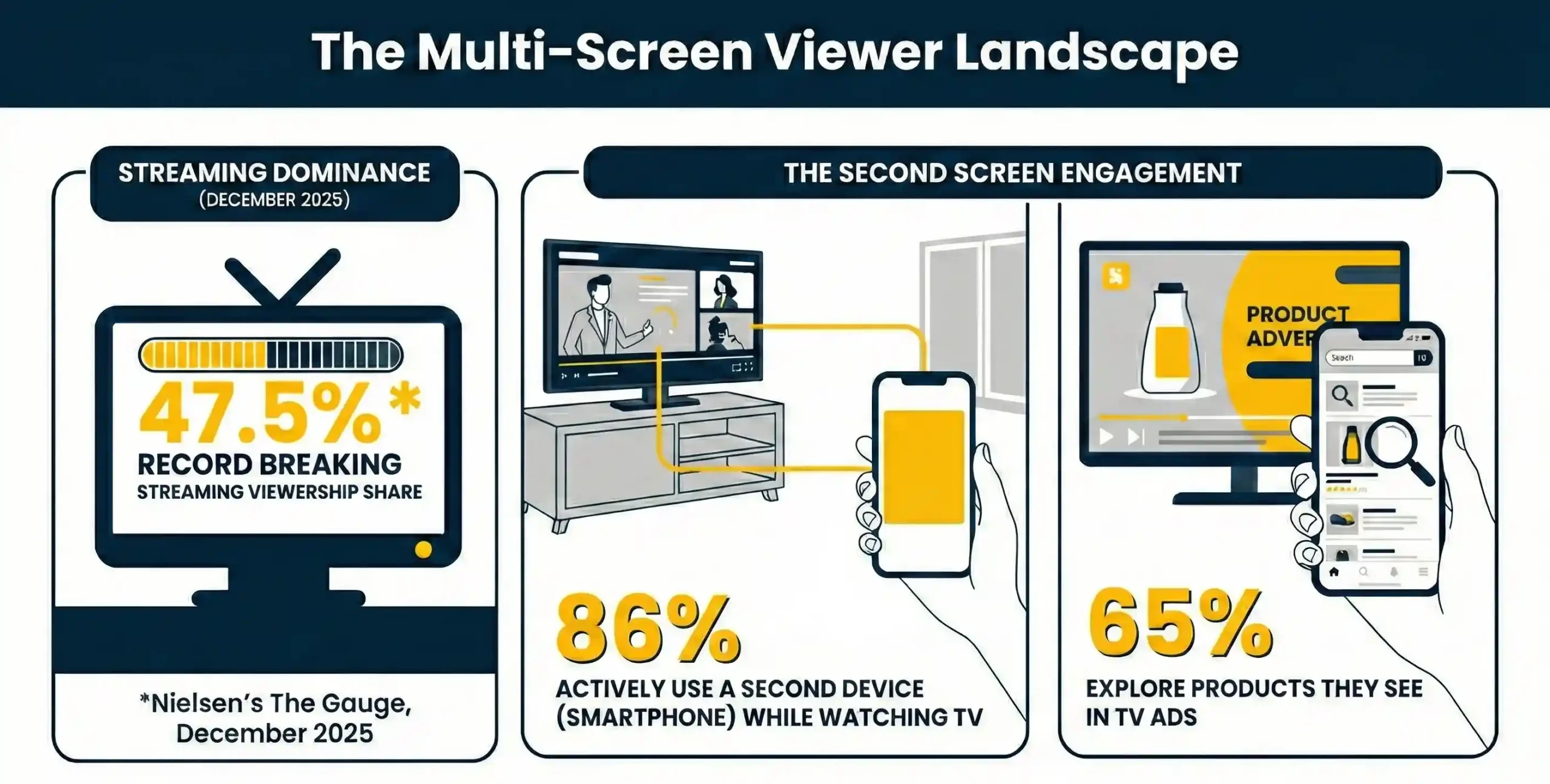
Roughly 86% of internet users actively use a second device, most often a smartphone, while watching TV. Even more telling, about 65% of viewers use that second screen to research or explore products they see advertised on television. In other words, the intent is already there; advertisers just needed a way to capture it.
YouTube ads on CTV take advantage of this by turning the TV screen into a digital storefront that lets viewers scan a QR code or make a purchase. By layering shoppable CTV features onto traditional video creatives, advertisers can drive lower-funnel conversions from top-funnel placements.
How Do YouTube CTV Ads Drive Instant Commerce?
To advertise on CTV effectively, you need to understand how the interaction actually works. So, how do YouTube shoppable TV ads work for viewers? The experience is best described as a seamless handoff between screens.
When someone watches a YouTube advertising campaign on their smart TV, the ad does more than deliver video. Using data from the advertiser’s Google Merchant Center feed, YouTube dynamically surfaces browseable product imagery alongside the video content without interrupting playback.
Here’s what the user journey looks like:
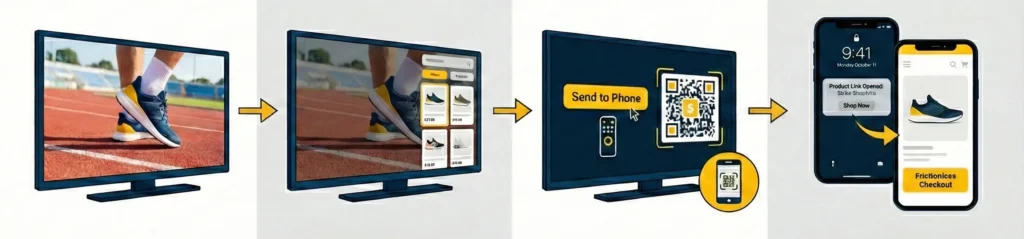
- Hook: The video ad plays on the TV, taking full advantage of the large-screen, immersive viewing experience.
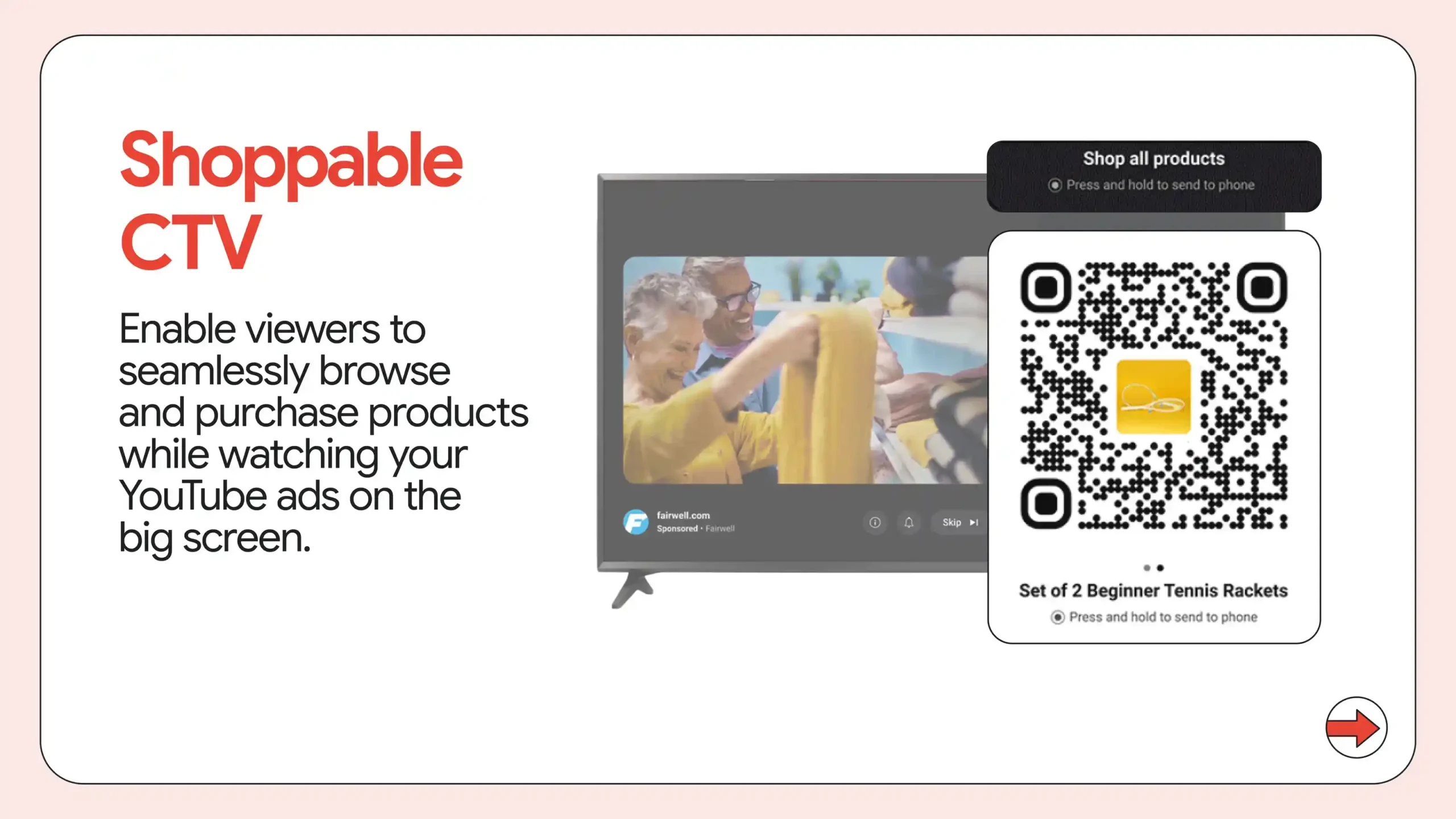
- Overlay: The YouTube app displays product images pulled directly from the Merchant Center feed, visible next to the video.
- Interaction: A “Send to Phone” prompt or a QR code appears on screen.
- Conversion: The viewer scans the QR code or clicks using their remote, instantly opening the product link on their mobile device, where they’re already logged in and primed to purchase.
This flow addresses one of television advertising’s longest-standing challenges: attribution. Instead of inferring impact through lift studies or delayed conversions, advertisers can now track direct engagement and clicks, connecting connected TV ads to measurable outcomes.
Further Reading
How Strike Social Delivers Smarter CTV Campaigns
Our move into Connected TV is guided by the same principles that drive our social media success: accountability, optimization, and scale. Strike Social utilizes advanced machine learning to bring YouTube CTV into a unified buying and reporting environment, making it easier for brands to launch, manage, and optimize CTV campaigns without added complexity.
Executing Shoppable TV Ads Using Demand Gen and Performance Max
Google’s AI-driven campaign types, specifically Demand Gen and Performance Max (PMax), are the engines powering the shift to shoppable TV ads. These campaigns are designed to find conversions across all of Google’s inventory, and increasingly, their algorithms are identifying YouTube TV channels and CTV placements as high-value opportunities.
To get ahead, you need to deploy them based on where your customer is in the funnel.
Shoppable CTV Ads on Demand Gen
Demand Gen is built for the mid-funnel, helping brands create interest and desire among users who are discovering new products but aren’t actively searching yet.
- How It Works: Demand Gen campaigns allow you to pair your most immersive video storytelling with a browseable product feed. When served on YouTube TV channels, the product cards appear alongside the video, turning a brand story into a shop-ready catalog.
- Why Use It: Shoppable CTV on Demand Gen drives an average of 7% more conversions by placing your product catalog directly alongside immersive storytelling content. It allows you to introduce the brand visually while offering an immediate mechanism to shop.
Shoppable Ads on Performance Max (PMax) Campaigns
Performance Max is designed for bottom-funnel performance at scale. It is designed to capture demand at scale across all Google inventory sources.
- How It Works: PMax uses YouTube TV channels and CTV inventory as just one touchpoint in a larger, automated journey. The algorithm might show a user a CTV ad to prime them, then convert them later via a Search or Shopping ad. When it does serve on CTV, it dynamically pulls the most relevant products from your Merchant Center based on the user’s recent browsing history.
- Why Use It: PMax employs data-driven attribution (DDA) and tracks multi-touch consumer journeys, including view-through conversions from CTV impressions. Recent updates provide channel-level reporting across YouTube (including CTV), Search, and mobile, along with GA4 integration for cross-device measurement using modeled or user-ID-based conversions.
What The Experts Say
Our Strategy Lead and VP of Sales, Lee Baler, advises caution before fully committing budgets to these platform updates. As Baler explains, “Google makes a change in the platform and it’s an Easter Egg hunt… Most people won’t know for months.” He notes that these changes require utmost vigilance before jumping in.
This perspective is echoed by Mike Ryan, head of ecommerce insights for Smarter Ecommerce, who observed a significant increase in TV impressions across nearly 1,000 client accounts. This surge began in late Q2 and saw a further boost in November and December.
While many advertisers were slow to recognize this shift, we proactively identified the significant uptick in CTV placements within these campaigns. By recognizing this trend early, before it became a popular ad placement, we were able to secure lower competition and better inventory for our clients.
FAQs: What You Need to Know About Shoppable CTV Ads
Shoppable CTV ads are video advertisements displayed on connected TVs (smart TVs, gaming consoles, streaming sticks) that allow viewers to browse and purchase products. They bridge the gap between streaming and e-commerce by displaying product feeds or interactive elements directly on the TV screen alongside the video.
When a shoppable ad appears on YouTube TV or the YouTube app, it pulls product data from the advertiser’s Google Merchant Center. Viewers can interact with the ad using their remote to send a link to their mobile device or scan a QR code to complete the purchase on their phone.
Yes. Google has expanded its inventory sources so that Demand Gen and Performance Max Campaigns can serve shoppable creatives across Google placements, YouTube TV channels, and standard YouTube CTV inventory.
They are effective for both, but they excel at the middle-to-bottom funnel. While the video component builds awareness, the interactive elements (product feeds) are specifically designed to drive e-commerce sales via connected TV, making them a dual-serving format.
YouTube Shoppable CTV in Action
With YouTube shoppable CTV ads, brands can turn living room viewing sessions into active shopping experiences.
As Lee Baler highlights, the brands that succeed are those that act early: testing new formats, experimenting with placements, and capitalizing on opportunities before the rest of the market catches up. While competitors are still adapting, advertisers can lower their CPA, capture premium inventory, and claim the living room as their brand’s very own conversion space.
By integrating shoppable CTV ads into a YouTube advertising campaign, brands can connect awareness with action, guiding audiences from passive viewing to meaningful purchases. The shift from linear to connected TV is here; the question is whether your brand will lead the way.

Article by
Syd Olivarez, Strike Social’s SEO Content Specialist
Syd crafts content on paid digital advertising strategies, blending 5+ years of writing expertise with 3 years in digital marketing. She keeps up with the latest trends to deliver valuable insights that keep brands informed and competitive.


