

Overview
- How to review Q4 Meta campaign costs alongside audience response and business outcomes.
- What advertisers should check before carrying creative, budgets and campaign settings into Q1.
- How to turn regional planning priorities into practical decisions for each APAC market.
A Q4 Meta campaign review should lead to clear decisions about the next quarter’s budget and creative. To decide which campaigns deserve continued investment, advertisers need to review costs alongside audience response and the relevance of the offer.
A December promotion may generate strong traffic, while a product demonstration attracts useful inquiries. Before carrying either into Q1, check whether the offer remains relevant, the creative still addresses a customer need and the result can be measured consistently.
For advertisers managing Facebook and Instagram campaigns across APAC, that review also needs a market-level view. Local calendars, offers and customer journeys can change how a regional strategy works in practice.
This guide uses historical campaign analysis and practical review questions to help teams decide what to retain, revise and test in Q1 2027.
Jump to Section
- Meta Advertising in APAC: Turn Q4 Learning Into a Smarter Q1 2027 Strategy
- What Can Historical Q4 Meta Campaign Data Tell Advertisers?
- What Do These Findings Mean for Advertisers?
- Why Costs and Audience Response Belong in the Same Conversation
- Five Questions for Your Q4 Campaign Review
- September 2026: A recent regional cross-check
- Building a Q1 2027 Meta Ads Strategy Across APAC
- Creative, Automation and Measurement Priorities
- How Strike Social Puts Meta Ads Strategy Into Practice
- Q1 Planning Checklist
- Frequently Asked Questions
- Final Takeaway: Use Q4 as Evidence, Not a Forecast
Meta Advertising in APAC: Turn Q4 Learning Into a Smarter Q1 2027 Strategy
Start by separating the campaigns behind the quarterly totals. A regional average can conceal differences in what each market was trying to achieve and how audiences responded.
For example, a November promotion and a December product launch may appear in the same report. Record their offers, audiences and goals before comparing costs or deciding which approach deserves further investment.
Begin by organizing the review around the outcome each campaign pursued:
- Awareness: Review cost per 1,000 impressions (CPM), reach and frequency to understand delivery costs and audience coverage.
- Video viewing: Review the specific viewing event, cost per view and video length. Keep the definition consistent when comparing results.
- Traffic: Review cost per link click (CPLC) alongside landing-page delivery and relevant website actions.
- Leads and sales: Review acquisition costs together with lead quality, purchases or revenue where reliably measured.
Keep campaign-level findings separate from regional assumptions. A traffic campaign and an awareness campaign may support different next steps, even within the same market.
For teams reviewing Southeast Asian activity, examine Malaysia, the Philippines, Singapore and Thailand separately before deciding what can inform a regional plan.
What Can Historical Q4 Meta Campaign Data Tell Advertisers?
Historical Q4 results can help advertisers identify when campaign costs changed and which markets deserve closer attention before Q1 planning.
Strike Social reviewed selected Meta campaigns across Malaysia, the Philippines, Singapore and Thailand from October to December between 2022 and 2025. The analysis compared cost per 1,000 impressions (CPM), cost per link click and cost per ThruPlay, a qualifying video view. November and December costs were measured against October within each available year.
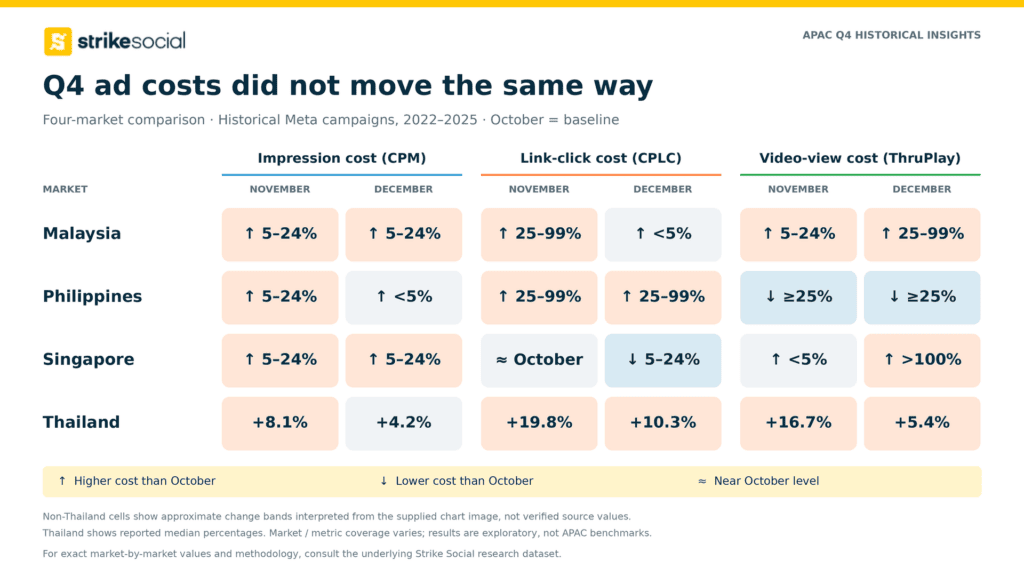
Source: Strike Social historical Meta campaign analysis, October–December 2022–2025. October = 100. Historical coverage varies by market and campaign group; findings are not industry benchmarks.
In the campaigns reviewed, costs followed different patterns across markets:
- Malaysia: Link-click costs rose in November before returning closer to October levels in December.
- The Philippines: Link-click costs remained above October levels in both months, while video-view costs were lower.
- Singapore: The sample showed a substantial increase in December video-view costs, although limited historical coverage warrants caution.
- Thailand: The market with the most complete historical comparison recorded higher costs across all three measures in November. Costs eased in December but remained above October levels.
These results show why a single regional cost assumption can overlook differences between markets and campaign goals. They also highlight the need to check how much historical data supports each comparison.
What Do These Findings Mean for Advertisers?
For advertisers managing campaigns across multiple markets, the findings support budget planning based on local performance history and campaign objectives.
Impression costs, link-click costs and video-view costs can move differently. Evaluating these costs alongside audience response and campaign outcomes helps advertisers determine whether changes warrant adjustments to budgets, creative or placements.
Use historical results to build budget scenarios and identify priorities for testing. Compare campaigns with similar goals and reporting settings, while accounting for changes in audiences, creative, offers and placements that could influence results.
Past Q4 performance provides context for Q1 2027 planning. Current campaign results should guide decisions as the quarter progresses.
Want to explore the complete regional analysis?
Download Strike Social’s APAC Meta Advertising Guide for a closer look at historical advertising cost movements across Malaysia, the Philippines, Singapore, and Thailand, including detailed market comparisons and supporting research.
Why Costs and Audience Response Belong in the Same Conversation
Evaluating CPM alongside audience response and campaign outcomes helps advertisers determine whether changes in impression costs warrant adjustments to budgets, creative or placements.
For example, a campaign could have a higher CPM but a lower cost per link click if its ads generate clicks more often. Looking at CPM alone would miss that improvement.
The metrics you review should follow the campaign’s goal. For traffic campaigns, check how often impressions lead to link clicks and what each click costs. For video campaigns, review the viewing metric selected for the campaign alongside its cost. If you are measuring purchases or leads, include those results in the assessment.
Compare campaigns with similar goals, reporting periods and measurement settings. Also check whether changes in creative, audiences or placements could help explain the results before adjusting your budget.
Our APAC travel advertising calendar applies this approach to campaign timing, showing how local planning windows and media performance can inform advertising decisions.
Five Questions for Your Q4 Campaign Review
First, what business outcome did each campaign actually pursue?
Reach, video engagement, traffic, leads and purchases need different success metrics. Assess each campaign against the outcome it was designed to support.
Second, did the measurement remain consistent?
Check conversion events, attribution settings and website tracking. Note any changes, and review downstream lead or sales quality where the data is available.
Third, what changed during the quarter?
Record promotion dates, budget adjustments, creative rotations, audience settings and landing-page changes. These annotations give the team a clearer basis for investigating performance differences.
Fourth, which creative messages generated meaningful response?
Identify the customer need, benefit or proof point behind the response. Review it against the campaign’s objective before deciding which concept to develop further.
Fifth, what learning is transferable to Q1?
Separate lessons about the product or audience from results tied to an expired offer. Record the evidence, its limitations and the next test.
September 2026: A recent regional cross-check
A separate Strike Social internal review offers a more recent view of market differences. In September 2026, impression-optimized CPM increased in Malaysia, the Philippines and Singapore compared with August, while Thailand showed a decline. These movements describe the managed-campaign populations analyzed. Sample depth differed by market, so the review does not establish a platform-wide trend.
This September comparison is separate from the historical Q4 index analysis. For APAC planning, use it to question a single regional budget adjustment, then check current results within the same market, objective, and measurement definition before revising a Q1 plan.
Building a Q1 2027 Meta Ads Strategy Across APAC
Begin with each market’s commercial calendar and business objective. Map the launches, promotions and customer decision periods that determine when the campaign needs to build reach or prompt action.
Use comparable historical periods to establish a baseline, then check it against current delivery. Annotate changes in campaign mix and promotions before attributing differences to seasonality.
Maintain common reporting definitions across markets while adapting language, offers, cultural references and creative formats locally. This gives regional teams a consistent way to review results while allowing campaigns to reflect local needs.
Build a controlled testing plan around a small number of meaningful hypotheses. For each test, record the question, planned budget, review date and result that would justify increasing spend, revising the creative or ending the test.
Further Reading
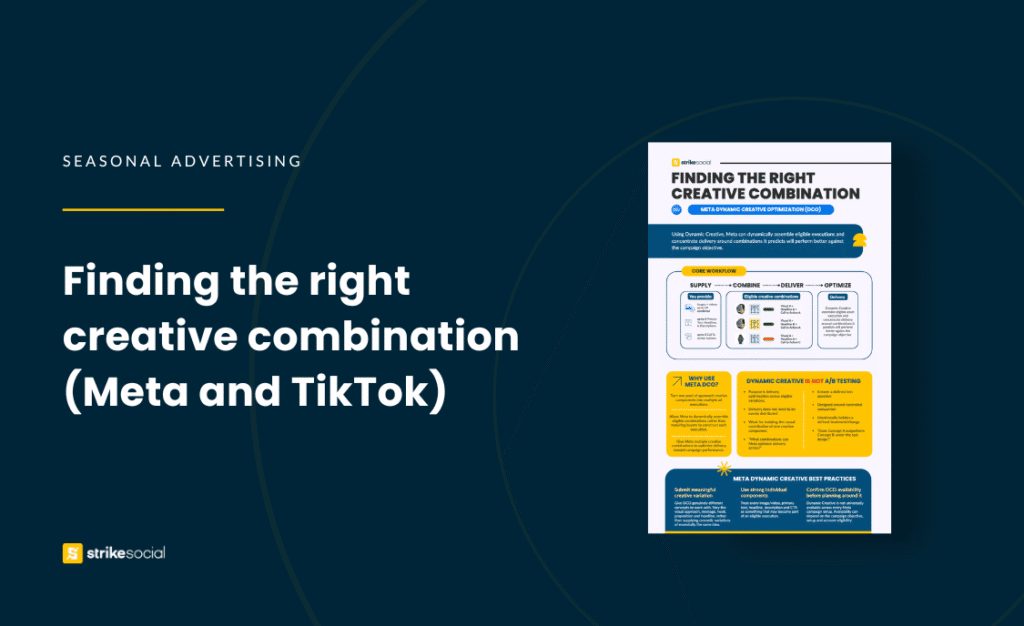
Turn travel insights into an APAC media plan
Local booking windows and media performance shape when to invest. Our guide explores how historical campaign results, creative testing and current performance can inform campaign timing and budget decisions across YouTube, Meta and TikTok.
Creative, Automation and Measurement Priorities
Review automation settings against the campaign’s objective and the controls it requires. Avoid unnecessary structural complexity, check the quality of creative and measurement inputs, and keep the media buying team responsible for interpreting results. Our guide to Meta Advantage+ versus manual campaign setup explores these planning choices.
Creative diversification is most useful when assets test different ideas. A product demonstration, creator-led narrative, problem–solution message and clear offer can address different customer questions. For Q1, identify what each asset tests and which response would make the concept worth developing further.
Keep measurement part of the creative review. Compare results against the campaign’s actual success metric and check relevant website or sales activity where available. More delivery to one variation does not, by itself, explain why performance changed. Use a controlled test when the question requires causal evidence.
How Strike Social Puts Meta Ads Strategy Into Practice
Strike Social’s work with an electronics brand in Australia shows how campaign objectives can guide audience targeting, creative and placement decisions.
Using Video to Support Brand Awareness
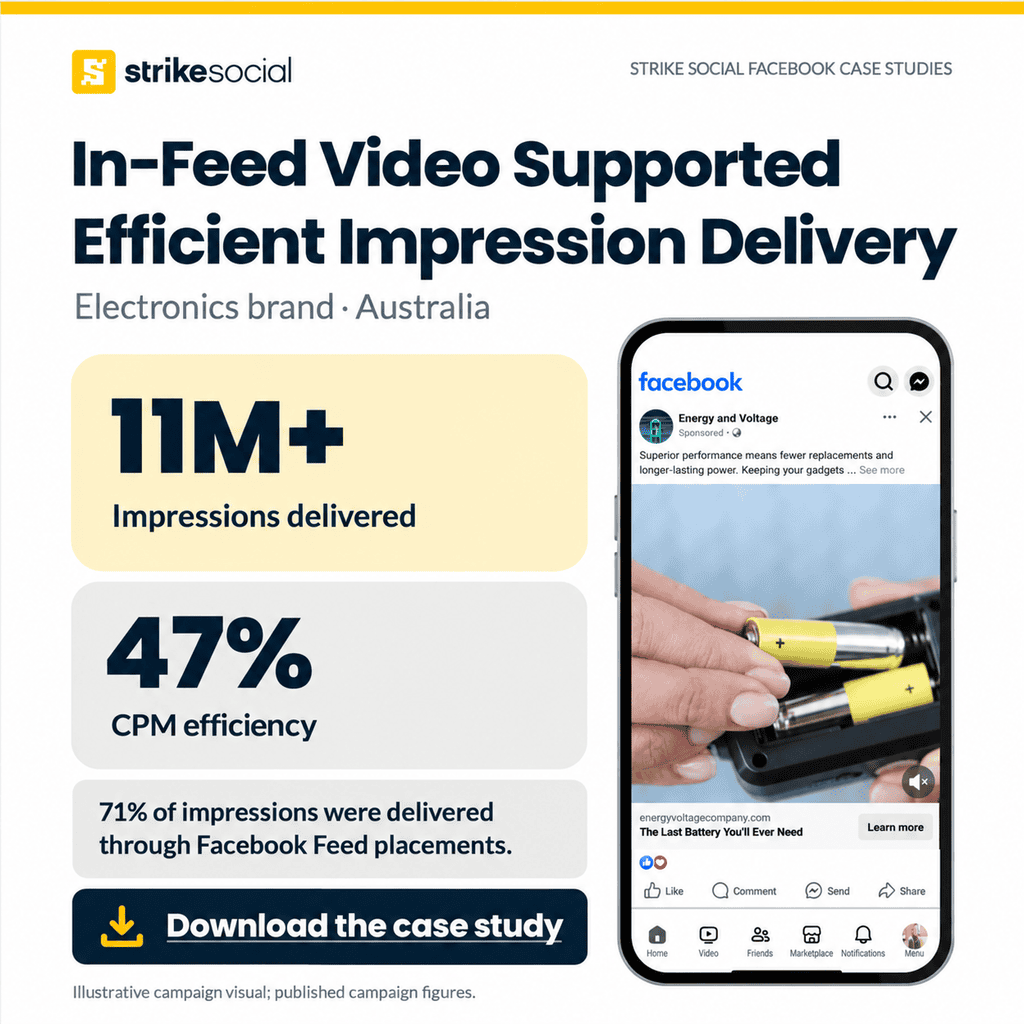
A global electronics brand wanted to highlight the durability and performance of its latest product line to Australian consumers. Strike Social used historical campaign insights to refine audience targeting and allocate budget across video placements.
The campaign delivered more than 11 million impressions and achieved 47% CPM efficiency. Facebook Feed accounted for 71% of total impressions, with Stories and Video Feed contributing additional delivery.
For Q1 2027 planning, review placement-level delivery alongside CPM to identify which video formats warrant further testing. Use your own market and campaign results to guide budget decisions.
Read the Australian electronics case study for the campaign details.
Q1 Planning Checklist
- Confirm the business outcome and success metric for each campaign.
- Audit measurement and attribution consistency.
- Document promotions and other material changes.
- Identify distinct creative hypotheses for testing.
- Establish test budgets, review dates and decision criteria.
- Check local advertising policies and creative localization.
- Record assumptions and limits alongside recommendations.
Frequently Asked Questions
Why do Meta advertising costs change during Q4?
Advertiser demand, auction conditions, audience behavior and campaign mix can influence costs. Effects vary by market and campaign. Review comparable activity before attributing a cost change to seasonality.
Does higher CPM mean worse performance?
Not necessarily. CPM measures impression cost. Review it alongside audience response and the campaign’s intended outcome, such as qualified leads or purchases where those are measured.
Should brands reduce Meta spending immediately after the holidays?
Not automatically. Assess current demand, offer relevance and business objectives before changing the budget. Use recent results alongside comparable historical campaigns to decide which activity to continue, revise or reduce.
Can one strategy work across all Southeast Asian markets?
A common planning and measurement framework can support regional consistency. Execution still needs to account for market differences in language, offers, calendars and audience response.
What does ThruPlay measure?
ThruPlay is a Meta video-view event. Meta’s 15-second ThruPlay definition counts plays to completion or for at least 15 seconds. In this analysis, the ThruPlay response rate is the event count divided by impressions; it should not be read as a full-video completion percentage or a sales outcome.
Final Takeaway: Use Q4 as Evidence, Not a Forecast
A Q4 review should leave the team with a decision for each major campaign: what remains relevant, what needs revision and which question deserves a test. For Q1 2027, tie each decision to a specific market, objective and source of evidence, then use current results to determine whether it still holds.
Strike Social works with brands to connect campaign analysis with media buying and creative execution. Explore the Meta case studies above or contact our team to discuss a Q1 2027 plan built around your market and objectives.
Get the Meta APAC Advertising Guide
Strike Social’s forthcoming Meta APAC Advertising Guide is planned to bring together regional campaign-planning frameworks, relevant case studies, and historical Q4 analysis to support your next campaign review.

Article by
Michelle Severino | Media Expert, Strike Social
Michelle Severino is a Digital Account Director at Strike Social, bringing a client-focused perspective to paid social advertising strategy and campaign performance. Her approach connects campaign planning, creative decisions, and performance measurement with advertisers’ business objectives.
Through her insights, Michelle helps advertisers understand campaign results, evaluate platform capabilities, and make informed decisions about creative testing and media investment.


