

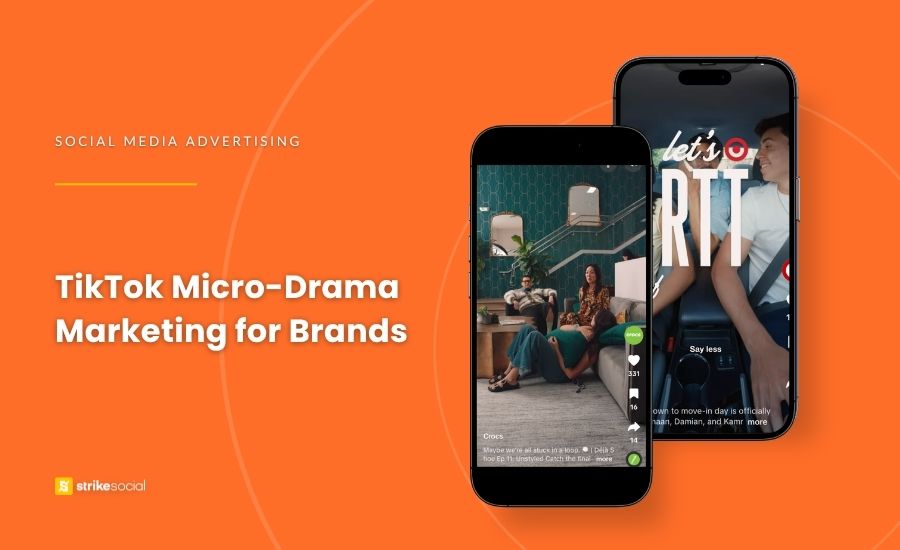
Omdia projected that micro-dramas would generate $11 billion in global revenue in 2025. More than 60% of that revenue was expected to come from subscriptions or transactional payments, while the United States led markets outside China. The figures point to an established audience and a working monetization model, not simply another short-form content trend. But will this micro-drama marketing the new hype for brands in the post-short-attention-span era?
Key Takeaways: What Media Buyers Need to Know About TikTok Growth Max
- A micro-drama needs a continuing story: Several related uploads do not create a series unless each episode advances the characters, conflict, or narrative.
- An owned production is only one route: Brands can develop a series, work with a publisher, amplify ordinary episodic posts, or advertise within the viewing environment.
- Ordinary posts and formal TikTok formats are different: Mini Dramas and Drama Series require separate publishing and monetization setups.
Jump to Section
- Why Should Brands Pay Attention to Micro-Drama?
- What Counts as a Branded TikTok Micro-Drama?
- What Can Brands Learn From Existing Micro-Drama Campaigns?
- Should the Brand Produce Its Own Micro-Drama Series?
- How Should Brands Publish and Distribute the Series?
- How can paid media support micro-drama Advertising?
- Can Growth Max Sell Products Featured in the Series?
- When is TikTok Micro-Drama the wrong investment?
- TikTok Micro-Drama Marketing FAQs
Why Should Brands Pay Attention to Micro-Drama?
Micro-drama had already developed into a sizeable mobile entertainment business before many Western brands began experimenting with it. Now, specialist publishers, dedicated apps, production companies, media groups, and social platforms are all increasing the supply of vertical episodic content.
For advertisers, this trend opens up new ways to reach mobile audiences with entertainment that goes beyond traditional edutainment or branded content. However, not every brand’s customers are micro-drama viewers, and producing an owned series does not guarantee a positive return.
Media teams must determine which demographics, markets, and genres are most relevant to their brand. It’s equally important to understand how free and paying viewers behave differently, how much audience overlap there is with existing TikTok followers, and whether people respond differently to brand-produced versus publisher-produced mini stories.
What Counts as a Branded TikTok Micro-Drama?
A TikTok micro-drama is a continuing vertical story told across connected episodes. Its defining feature is serialization rather than a fixed runtime or minimum number of videos.
Characters or situations carry across the series, and each episode adds something to the larger story. Recurring characters, narrative progression, and a reason to keep watching matter more than episode length or series volume.
For branded productions, the product also needs a believable role in the plot.
A commercial divided into five uploads may still be one commercial. When each video repeats the same sales message and adds no new narrative information, the brand has produced several files rather than an episodic series.
| Feature | Standard TikTok ad | Branded micro-drama |
|---|---|---|
| Structure | Standalone | Episodic |
| Story development | Usually resolved in one video | Continues across several episodes |
| Viewer action | Watch, click, or engage | Continue into the story |
| Product role | Main message or offer | Part of the plot |
| Creative planning | Built around individual assets | Built around narrative continuity |
| Measurement | Evaluated per ad or campaign | Evaluated by episode and across the series |
The product may influence the conflict, reveal something about a character, or provide a route to commerce without interrupting the story. The team also needs to plan what each episode contributes, how viewers find the next installment, and which posts may receive paid support.
What Can Brands Learn From Existing Micro-Drama Campaigns?
The following campaigns illustrate different creative and distribution models. They should not be treated as evidence that every brand used TikTok Growth Max.
Crocs: Give the Product a Role in the Plot

Crocs first partnered with ReelShort on Charmed to Meet You, a five-part series that incorporated Jibbitz charms into the story and generated a reported 7.8 million views during its first three weeks.
The brand later published Déjà Shoe, a seven-episode TikTok series with TikTok Shop product tagging. The campaign demonstrates how ordinary TikTok content can connect storytelling with commerce, but the public announcement does not identify it as a Growth Max campaign.
JCPenney: Begin With the Audience

JCPenney worked with TelevisaUnivision on El amigo de mi novio es millonario, a five-part Spanish-language micronovela that generated more than 16 million impressions and 5.6 million video views.
The partnership shows how a brand can enter the category through a publisher with an established audience and production model rather than building the full operation internally.
Should the Brand Produce Its Own Micro-Drama Series?
An owned series makes sense when the brand has a premise that supports several episodes, a product that fits the story, and a team capable of maintaining production after launch.
A pilot should test whether viewers understand the premise, respond to the characters, and have a reason to continue before the company commits to a complete run.
Assess narrative range, product fit, production continuity, talent and usage rights, publishing, paid-media authorization, and measurement ownership.
- Narrative range: Can the premise support several conflicts or developments without repeating the same idea?
- Product fit: Does the product influence the story naturally rather than interrupting it?
- Production continuity: Can the team maintain consistent writing, performances, editing, and visual direction?
- Talent and usage rights: Do the agreements cover publishing, paid promotion, editing, and cross-platform reuse?
- Publishing plan: Are the release sequence, episode navigation, commerce routes, and community responsibilities defined?
- Paid-media authorization: Can the brand amplify its own posts or authorized partner content when distribution support is needed?
- Measurement ownership: Does the team know who will track episode response, continued viewing, brand outcomes, and commerce activity?
The premise, product role, talent rights, and production ownership should be resolved before filming begins. Several open areas suggest that a publisher partnership or smaller test would be safer than a full owned production.
The pilot should include an opening episode and at least one continuation point so the team can compare initial attention with the response after the story develops. Paid support can reveal whether promising content needs more reach, but it cannot make weak progression look healthy.
Sustainable production also depends on continuity across writing, performance, editing, visual direction, and release timing. AI tools may assist with production tasks, but human oversight is still needed to keep the story coherent.
How Should Brands Publish and Distribute the Series?
An ordinary branded series can be published as regular posts through the brand’s account or an authorized partner account. Episode labels, release timing, profile organization, commerce routes, and paid-media permissions should be settled before launch.
A playlist may help viewers follow the sequence, but it does not make the posts eligible for Growth Max. Eligible posts can still receive paid support through Spark Ads.
How Do TikTok’s Formal Episodic Formats Differ?
Drama Series are published through an associated TikTok Business Account and distributed directly through TikTok’s main feed. Viewers can watch the episodes without first visiting the profile, then engage with embedded ads to unlock more.
Mini Dramas are H5-based Mini Programs hosted inside the TikTok Minis Center. Viewers can discover them through TikTok touchpoints such as Search and the For You Feed before entering the Minis Center, where payment or embedded ads can unlock more episodes.
Strike Social’s complete Growth Max guide covers the separate onboarding, Day Zero events, bidding, and reporting requirements for these formats.
How Should Brands Measure Micro-Drama Performance?
A branded micro-drama should be measured at the episode, series, brand, and monetization levels. The final layer applies only when the content uses an eligible paid or advertising-supported model.
| Measurement level | What the brand should examine |
|---|---|
| Episode response | Video views, watch time, completion, drop-off, and engagement |
| Series response | Movement into later episodes, returning viewers, repeat engagement, and follower growth |
| Brand response | Product interest, profile activity, search behavior, site traffic, commerce actions, or brand lift where available |
| Monetized content | Paid episode-unlock or embedded ad-revenue signals only when the series uses an eligible monetized setup |
Before launch, the team should establish a consistent episode-naming and reporting structure so post-level results can be compared in sequence. When TikTok does not provide a direct progression report, later-episode performance, returning-audience signals, profile activity, and commerce data may need to be evaluated together.
CTR can diagnose paid distribution, but it does not show whether viewers want the story to continue. For eligible Growth Max Mini Dramas, purchase-related reporting refers to episode unlocks rather than product sales.
Further Reading
Optimize TikTok Ads CTR and Improve Performance
Understanding your TikTok ads CTR is the first step to understanding how users engage with your ads on a fast-paced, scroll-heavy platform. On TikTok’s algorithmic feed, attention is fleeting. If your TikTok ad fails to capture interest within the first 3 seconds, it disappears into the scroll, taking performance with it.
How Can Paid Media Support Micro-Drama Advertising?
Paid media should match the asset the advertiser is promoting.
- Spark Ads can amplify an ordinary episode from the brand’s account or an authorized partner account while keeping engagement attached to the original post.
- Mini Drama Feed Ads place eligible standard advertising inside TikTok’s dedicated viewing environment. In supported campaigns, the placement is automatically included with the For You Feed and cannot be selected or excluded separately.
- Growth Max promotes an eligible Mini Drama or Drama Series. It optimizes toward paid Mini Drama episode unlocks or embedded advertising revenue rather than ordinary post engagement.
Can Growth Max Sell Products Featured in the Series?
TikTok’s documented Growth Max setup does not include a retail catalog or TikTok Shop product source. Its purchase optimization applies to paid Mini Drama episode access, not to physical product transactions.
Advertisers focused on product sales should use a separate Sales, catalog, or Product GMV Max campaign. Eligible ordinary posts may still use TikTok Shop product tagging, but that feature is separate from Growth Max eligibility and monetization.
At a glance:
- Ordinary episodic posts: Publish natively and consider Spark Ads for amplification.
- Eligible monetized series: Use Growth Max when the content meets TikTok’s formal publishing requirements.
- No owned series: Consider publisher integrations or eligible Mini Drama Feed Ads.
- Physical-product sales: Use an eligible Sales, catalog, or TikTok Shop campaign.
When Is TikTok Micro-Drama the Wrong Investment?
An owned series is unlikely to be a good investment when the product cannot enter the story naturally, the concept is a conventional commercial stretched across several uploads, or the organization cannot maintain continuity and a reliable release schedule.
Brands that are not ready to operate a series can still reach the audience through publisher content, product integrations, Spark Ads, or eligible Mini Drama Feed placements.
TikTok Micro-Drama Marketing FAQs
Does Every Brand Need to Produce Its Own TikTok Micro-Drama?
No. A brand can work with a publisher, test ordinary episodic posts, or advertise within the Mini Drama viewing environment without producing a formal series.
What Makes a Series Different From a Multi-Part TikTok Campaign?
A series develops a continuing story across episodes. Splitting one commercial into several uploads does not create a micro-drama unless each installment advances the characters, conflict, or narrative.
Can Ordinary TikTok Posts Qualify for Growth Max?
Not by themselves. Ordinary posts can form a branded episodic series and receive paid support through Spark Ads, but Growth Max requires access to an eligible Mini Drama or Drama Series.
Does Growth Max Purchase Value Measure Product Sales?
No. Day Zero Purchase Value measures payments or tokens used to unlock Mini Drama episodes. It does not measure sales of physical products featured in the story.
How Many Episodes Should a Pilot Contain?
TikTok does not prescribe one universal episode count. The pilot should include enough content to establish the premise and test at least one continuation point before the brand commits to a complete series.
Is your AI Assistant giving you the right advice?
Partner with experts to activate, manage, and scale your Meta campaigns using our advanced proprietary ad technology for peak efficiency.
Where TikTok Micro-Drama Fits in the Media Plan
Micro-drama can function as ordinary branded content, a publisher partnership, or formal monetized TikTok content. The right route depends on whether the brand has a sustainable story, the necessary rights, and an eligible publishing and monetization model.
Strike Social helps brands and content partners determine whether a series qualifies for Growth Max, and then connects eligible content to campaign setup, Day Zero bidding, paid distribution, and measurement.


